
From “The Commodification of Wildness and its Consequences”, originally published at Black and Green Review
Earlier discussion of print edition
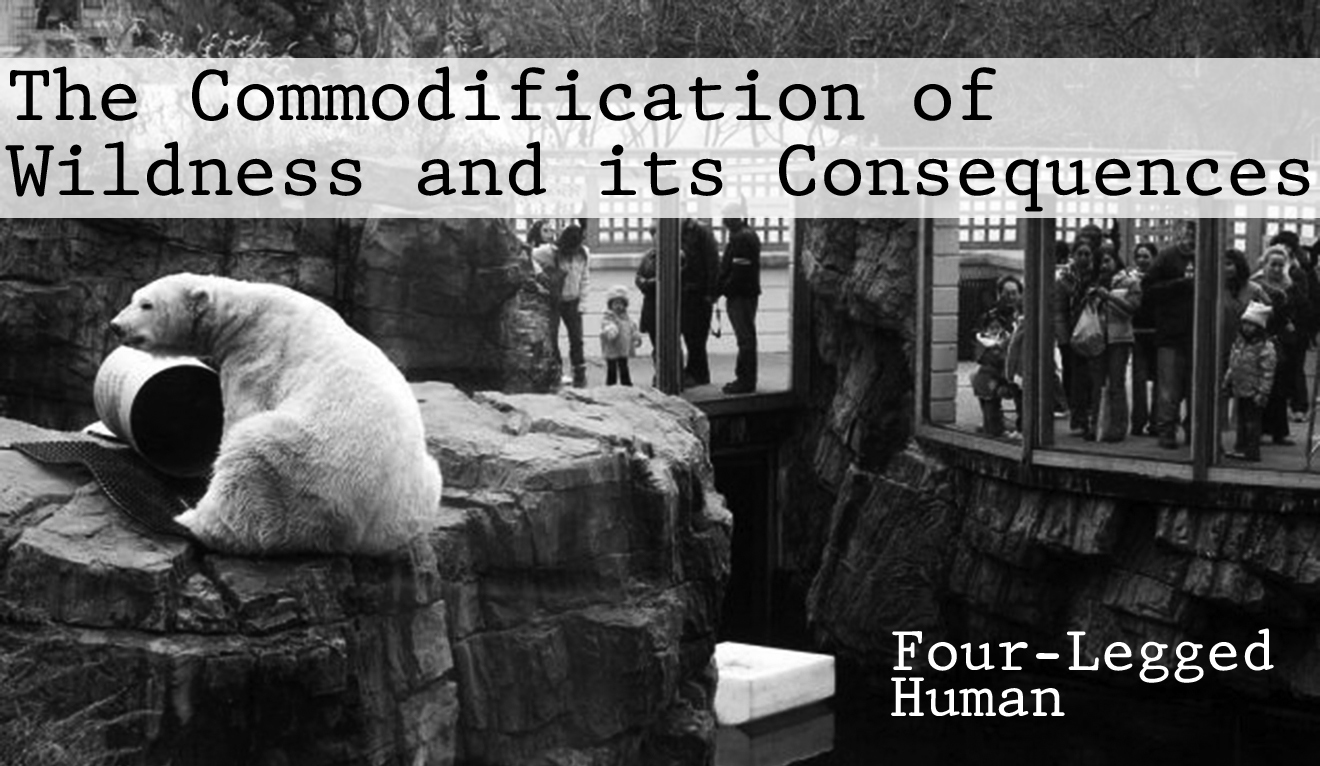
##Pastoralists, Markets, ‘Green’ Capitalism, and Species Extinction
We had been tracking the rhinoceros since the day before. The plan was to walk into the mopani, roughly following the course of the river so as to maintain proximity to a source of water, letting the animal tracks guide us wherever they took us. We camped in a meadow, home to an elder baobab tree, and in the morning resumed tracking our rhino. Ian is an expert tracker and every time it seemed we had lost the track in the grass, or the smudge of more recent impala or buffalo tracks, he would carefully make his readings and pick up the rhino again. Excitement ran through our minds and bodies in anticipation of our coming encounter with her.
“Don’t move” whispered Ian suddenly. We stood in silence, eyes wide, intently listening to the sounds of the veld. Satisfied we weren’t being watched, Ian motioned us over to see what had caused his abrupt attentiveness. There, perfectly clear in the red dirt, was a fresh track made by a tennis shoe. Somebody else was on the trail of our rhino. We all knew who this person was; a dangerous and hostile enemy of rhino and, equally, a great threat to us; rhino poachers, those who kill for horns to be sold in the Asian black market.
If these hostiles were to find the rhino it would surely be killed, stripped of its horns and left to rot in the hot sun of the African veld. If the poachers discovered us on their trail they would either run, or if feeling cornered, attempt to kill us as well. So our rhino tracking ended and we retreated back to the shelter of the river bank. Ian pulled out his satellite phone and made a call. “I’ve got fresh human tracks on top of fresh rhino tracks here” he reported. At dusk that night we went down to the river for water. In the distance I could see silhouettes of men with rifles slowly and quietly stalking up the river corridor towards our camp. Soon a group of men fully outfitted in military tactical assault gear were in our camp talking with Ian, getting all of the information he could provide them on the whereabouts, age, and direction of the tracks. Then this anti-poaching squad armed with assault rifles and grenades disappeared silently into the night, on the hunt for rhino poachers.
The next morning, as we moved away from the area in order to lessen our exposure to any hostilities, we heard gunfire in the distance. I still don’t know what actually happened. But I like to think that it was the poachers who got shot up and not the rhino. In fact, I like to think that us venturing across the veld at the time saved that rhino from being slaughtered for profit, at least for the time being.
Most experts agree that, in the face of a powerful poaching network administered by such entities as the Chinese and Vietnamese mafias, the remaining species of wild rhinoceros have little chance of not going extinct within the coming few decades. Although the anti-poaching squads have received millions of dollars in funding from various conservation interests they can’t keep up with the poachers and many speculate that the war against rhino poaching will prove futile, that the myth of rhino horn being an effective aphrodisiac in Chinese medicine has become irrefutable dogma for elite classes of Asian males, that the market is just too powerful, that the lure of a few hundred dollars for local ex-military riflemen come poacher for the horn cartels is just too strong. After all, a military trained African peasant could make $300 a year as a farmer/herder, but could pocket $3000 a year as a rhino poacher. A few successful rhino kills means the poacher becomes the wealthiest man in his village and along with that power, prestige, cars, and a smartphone.
Who could argue? We’re all just fighting for an equal piece of the pie. Occupy Wall-Streeters’ are fighting for the same things: a share of the wealth, the ability to purchase industrial food, buy plastic consumer goods, pay a monthly smartphone bill, and obtain whatever else has been deemed necessary for ‘survival’ in the 21st century.
But the rhino poacher in Africa lays a lot more on the line than does the American leftist struggling for his piece of the pie against capitalists on Wall Street. Officially poachers are supposed to be captured and put on trial but, as it was explained to me, behind the scenes a decision has been made to initiate a shoot-to-kill policy on rhino poachers as it is now believed by officials that the only hope of saving the rhino from extinction is to instill in every poacher a fear that they will surely be killed themselves if they happen to be caught trying to poach a rhinoceros.
Which side are you on? The side of wild nature? Or the side of civilized humanity? I myself am on the side of preserving what is left of wild nature and defending what is left of human wildness at all costs. And it seems at this point the logical conclusion of the agendas of both the political left and right are purely humanist and futurist. Either agenda, if seen to fruition, can only lead to the complete totalitarian domestication of the planet and the human species. And, at this stage, without totalitarian annihilation of wildness it does not seem that we can keep eight billion capitalists and wanna-be capitalists alive on this planet.
Most of those who care about the rhino will argue that we need to incentivize its protection by making it valuable as a source of local ecotourism income. This isn’t the only ‘green’ capitalism strategy proposed to save the rhino. A second market-based approach is to domesticate a population of rhinos and farm them in order to produce rhino horn for the Asian market and thus reduce pressure on wild rhinos. This may allow elite Asian men eternal access to rhino horn potion, but it is nonetheless a repeat of the same old story of domestication and commodification which creates wealth for a select few and wreaks havoc on planet earth. These are microcosms of the fundamental status quo argument that the market is the only useful tool for saving the planet.
Let’s just say that these proposed measures did save the rhino. This would mean that somewhere else a growth-oriented industrial-tech society must exist, a society which has the wealth to travel to Africa to view rhinos in the wild and/or to pay a premium price for rhino horn products. For such a society to afford to participate in this their source of wealth must come from some other high impact activity, decimating some other bioregion. To become an eco-tourist one needs to be paid, and to be paid, someone somewhere needs to be developing capital. Thus conservationists who promote these ‘green’ capitalism schemes are simply externalizing the impacts of commodification to elsewhere. Either of these measures amount to externalizations of costs and either way wild species will continue to go extinct.
The drive to exploit and destroy wildness in exchange for wealth, status, and prestige is nothing new. In fact it is inherent to the mindset of the African pastoralist cultures from which the modern poachers originate. Farmers and their pastoral trading partners have always been the enemies of wildness. The African peasants who have been recruited by the poaching cartels originate inside of cultures that in all of their known history have maintained heavy-handed regimes of domestication, expansion, and war, rooted in long standing trajectories of resource commodification for the purposes of producing a surplus of goods to be used for enhancing the power and wealth of elite tribal headman and their direct kin.
The Bantu pastoralist tribes were at war with wildness when they began invading southern Africa from the north three thousand years ago[5]. Lions, leopards, elephants, anything which got in the way of their expanding pastoralism, anything that might eat their cattle, were viewed as savage enemies. Viewed equally as enemies standing in the way of pastoralist progress were the San hunting cultures whom had made home in the region for at least seventy thousand years[6]. Never before encountering a domesticated animal, if a San hunter came across a cow he would very likely hunt the cow and kill it for food, with no concept that the cow was the property of the Bantu tribes. In retaliation the Bantu began hunting down the San[7]. For thousands of years prior to the current rhino crises the descendants of the modern poachers were capitalizing and expanding by domesticating, doing away violently with any wild human or beast which got in the way.
Continued in: The Commodification of Wildness - The Roots of Commodification