Questions of land access, hunting, conservation, and the locavore-vegan spectrum

Hadn’t really heard the distillation of Steven Rinella’s experience with introducing people to hunting. My limited experience, and my own experiences with learning to hunt, lead me to similar thinking. The primary problem: land access. Worth watching for a few reasons…

Article that started him down this path…
Locavore, Get Your Gun

@artc @hunter7 @nomadic @carson @greenwood (and anyone else), have experience on the difficulties of learning to hunt and/or helping others get into it?
1 Like

Land access has been a huge problem for me in the San francisco area. Paying for a guide who has their own network of land access options seems like the best choice for an intro experience - basically mirroring Pollan’s famous learning to hunt article.

I believe it still possible to hunt on public land in Northern California if one is willing to drive 2+ hours, scout land, and hump in a good 5+ miles under cover of darkness. But the cost of living here almost precludes the free time requires for such dedication.

Otherwise, there are private clubs and shared land leases one can join which I began to pursue but we decided to move to Memphis, TN before I got to a pricing stage.

I plan to pursue both guide and shared land options once I get to Memphis. I anticipate it’ll be much easier - I can lwalk to a monumental bass pro shop from my new digs.

I have a friend in ultra northern California who’s offered to let me hunt elk on her land. Unfortunately, I was an Oregon resident at the time, and the non-resident fees were crazy.

But yeah, my answer just highlights the difficulty.

There are a whole host of other logistics challenges once land/access is found. A long hunter’s ed waiting list. I spent hours on multiple trips at the DMV getting proper ID for a handgun purchase. What do I do with an entire elk that you’ve hunted? I don’t have a local butcher/processor or a chest freezer. I don’t have many friends who would be willing to even eat wild elk. I also don’t have a vehicle capable of transporting such a mammal.

Most of these issues I think will be solved by this coming fall in Tennessee but it will be a multi-year endeavor for me from starting true pursuit of this goal to achieving it.

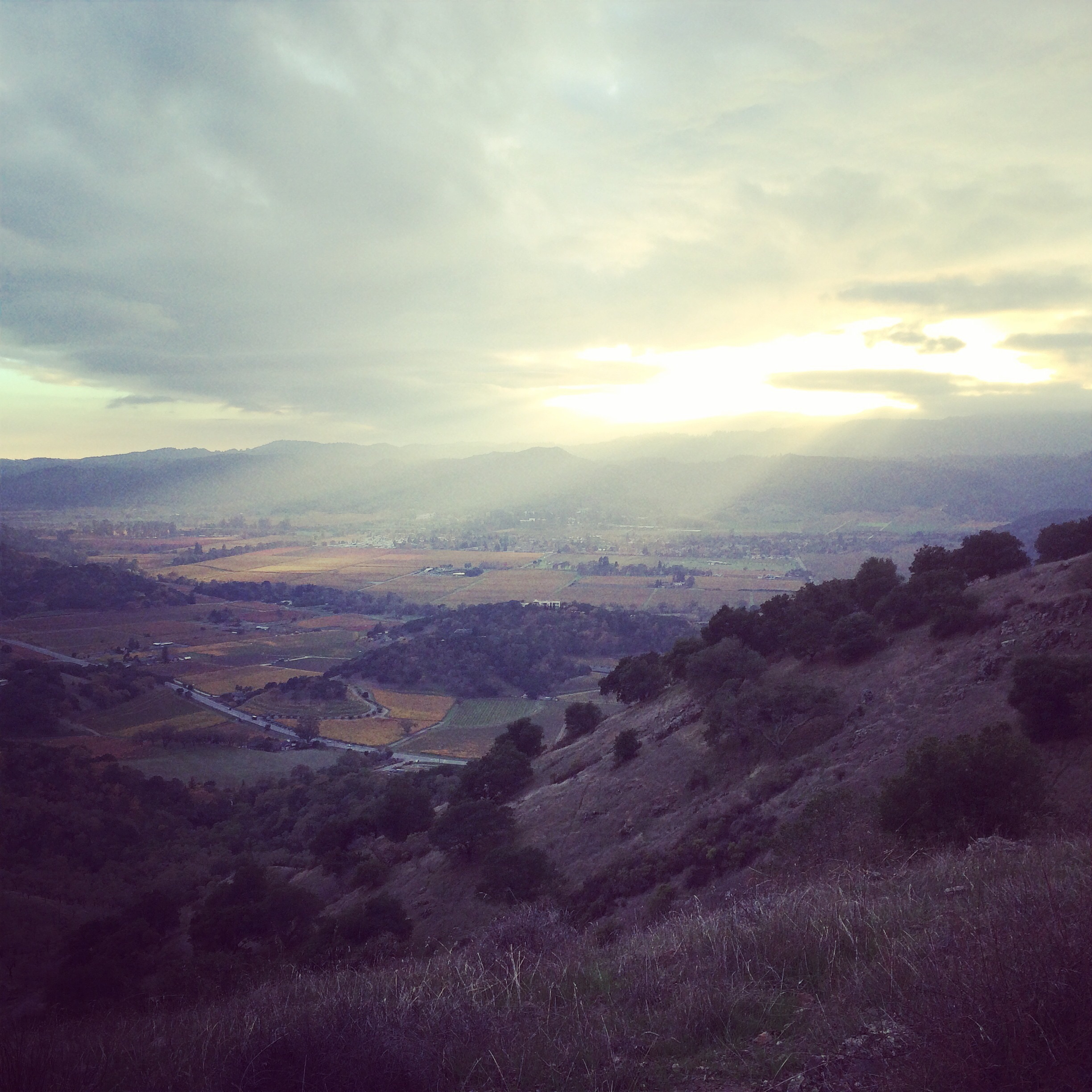
The one day of hunting I did get in this year was one of my favorite days of the past 5 spent in California though. I climbed a hill and looked down over Napa vineyards to my west and a few acres of public hunting land to my east.

When I was living in Texas my main issue was land access. Outside of that, I was new to hunting and incredibly eager to learn. I basically begged every person I knew to let me tag along with then to learn, unfortunately everyone I knew that hunted was male and for some reason they had a hard time taking me seriously. I was told multiple times that I wouldn’t have a good time or fit in with “the boys”.
It was very frustrating. When I finally did get someone to take me hog hunting they were convinced I would be unable to stomach cleaning a pig. Insulting.

My coworker’s niece was recently invited on a wild boar hunt. She’s also pretty good marksman on her high school shooting team. Little steps.

This varies greatly from state-to-state, but in PA a Red Tag farm gets a blanket permit (no fee) for deer outside of primary fawning seasons. The land owner only has to report the number of deer killed every month, no other permits are required. I don’t think I’ve seen a single Amish person with a permit, but a lot of them hunt deer on farms and I’ve had invitations to take part.
In New Jersey, the extended family of any land owner has the same kind of permit-free ability to hunt.
I’m not saying the results of this kind of thing are intrinsically good, but there are ways around it.
Of course, going big just makes things more obvious. Hunting and trapping small game are easy to work around or to go undetected. My first kill was a seagull in the UP with a rock and a knife.
But if you want to learn how to butcher, just start cutting up roadkill. It’s a great way to learn a lot about meat and decomposition. Basic butchery is far more instinctual than we’d like to believe. But even badly cut meat is still meat.
Even more complicated butchery is more accessible with all of the niche butchery going on out there in the world now. Goat and deer are fairly comparable, but nearly all meat is best fried/grilled, roasted or braised. Just simplify butchery by learning which muscles are most used and that helps determine the cooking technique. That helps give a larger and wider perspective about what is going on and makes cutting a carcass into meat more manageable.