Paleo Diet Heuristics / Occam's Razor

What is your best rule of thumb for considering what is and isn’t food?

It’s easy to say “just eat real food”, but there’s no such thing as food. Supermarkets have existed for a few decades, and have come to determine what our culture considers food. Markets have existed for some thousands of years, and have come to influence what many cultures consider food. It seems that many people in the paleosphere continue to come at the question with massively limiting assumptions at the outset. Markets create a perceived abundance by a paradoxical narrowing of choices.

So if we step outside of our cultural mythology, what quick and dirty rules can we use to answer this question in an animal way instead of a cultural way?

I keep coming back to optimal foraging theory*:

*I don’t agree with the blurbs reduction of OFT to calories, and would use “optimal” in a more robust sense.

Anyone who’s attempted to actually hunt and actually gather, grains, legumes, and dairy and Doritos quickly realizes they’re eliminated as go-to options through the optimal foraging theory framework. Veganism is quickly eliminated by the OFT framework. Mylar packaged Paleo Snacky Cakes® and paleo cupcakes obviously don’t make the cut.

“What humans ate in the paleolithic” is a problematic heuristic. That’s a question of archaeology, and not really a question about what being a human animal – being a hunter-forager – is about.

What’s your framework?
2 Likes

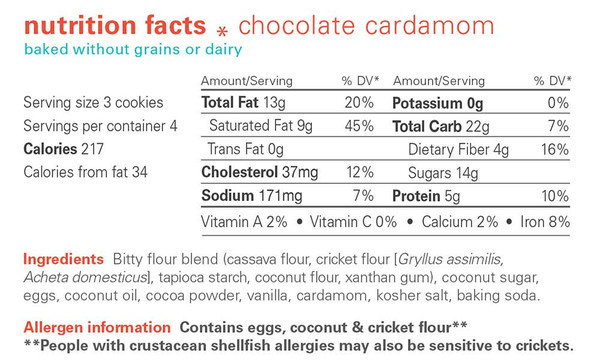
Cricket flour cookies have to count though, right?

Dammit!

4 Likes

In all seriousness, keto does a good job of wiping most things out. If there’s a pyramid on that one, I would say it’s this easy:

  1. Keto-foods foraged, hunted or scavenged
  2. Keto-foods locally grown
  3. Wild rice and/or other foraged starches (in a more wild scenario)
  4. Keto-foods further away

It’s helped my conception of food to recognize that any thickener (not just preservatives) wrecks my stomach. That eliminates a lot of “Paleo” branded stuff. It also turns out that carbovore foods are things I wouldn’t consider food as they are neither filling nor often are they even subsistence.
Basically, I wonder often that in some post-collapse scenario, I was to cross by a pile of still-sealed boxes of cereal. There’s a good chance that myself or anyone else wouldn’t mind the splurge. But, is the bodily rejection of that kind of hyper-processed “food” even a net positive? If I have the choice between what is effectively “food poisoning” and not eating, not eating wins 100% of the time.
That sounds dramatic and unrealistic in many cases, but we excuse a general state of discomfort based on our diets and a low level of tolerance traded off for long-term consequence as an acceptable line for what is or is not “food”. If you pull those things out, then it’s a lot more cut and dry and the impacts of those “foods” are obvious far quicker.

1 Like

My personal philosophy…Is it meat? —> Yes----> Eat it.
…-----> No -----> Don’t eat it.

1 Like

What could our evolutionary ancestors NOT be eating? :smile:

1 Like

Do you mean meat in terms of the common use as “muscle tissue”, or something like… animal parts?

1 Like

Yes, fatty muscle meat. My personal preference is 85/15 or 80/20 ground beef, 1 1/2 to 2 lbs per day with bacon. Occasionally I do eat a few ounces of raw beef liver.

1 Like

Here’s how I do it:

  1. Is it a type of food that Hunters and Gatherers have been observed eating (i.e. meats, fruits, nuts, vegetables <-- (outside of legumes, nightshade family, grains, etc.)?
  2. Can it, in the form in which I buy it, be recognized as having been a living thing or a part of a living thing?
  3. If I can help it, is it organic?
  4. And last but not least, Is it tastey? :stuck_out_tongue_winking_eye:
1 Like