Money: Making it, spending it and transitioning away from it

The idea that the making and spending money alienates one from the source of their sustanance has been in my head for probably 20 years now. That’s about as long as I’ve been on this journey. I have several questions that I’d like to pose to y’all.
Here’s one or two…
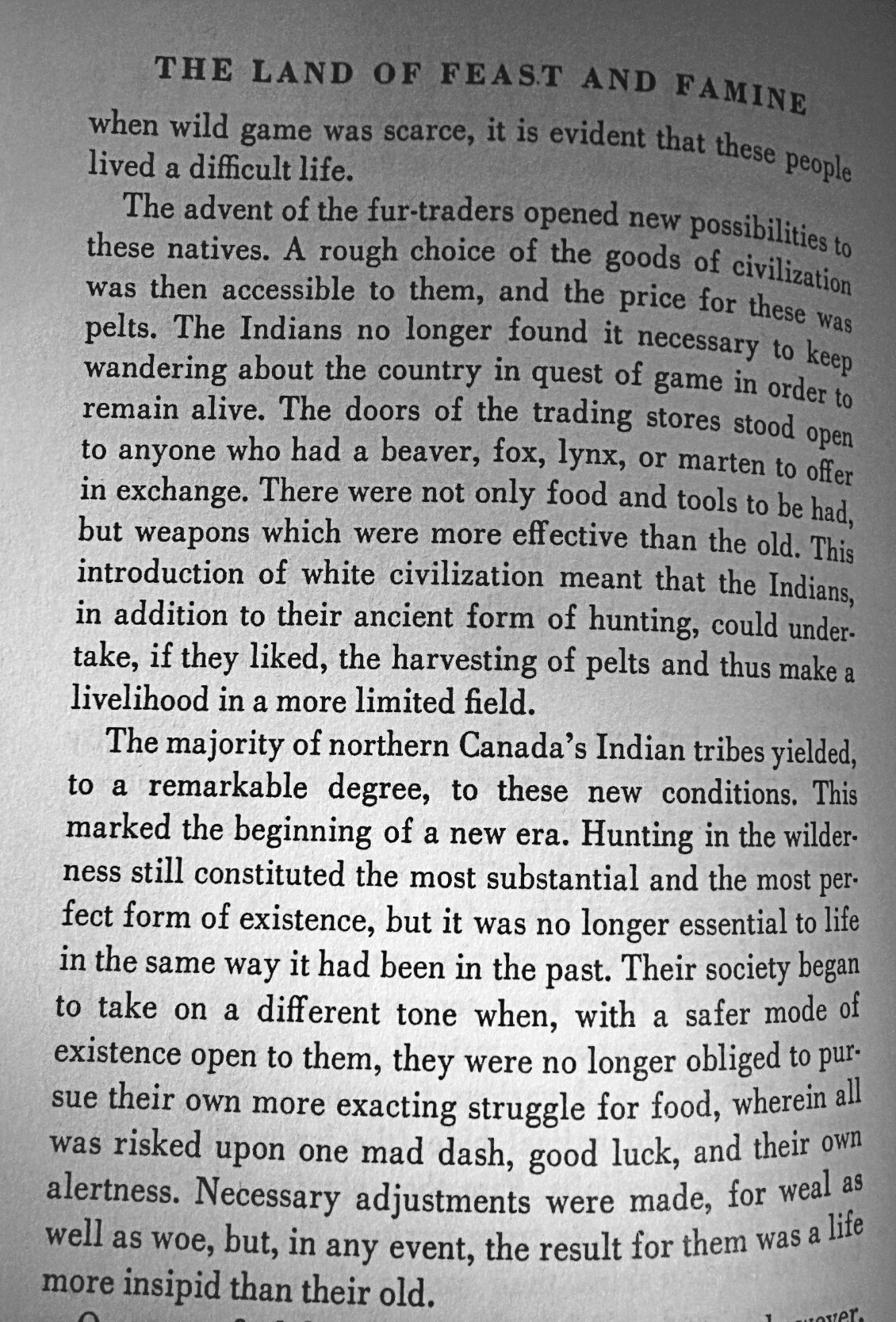
There are many examples in history of Oldway cultures losing a degree of autonomy and balance, through adopting major trading and selling into their economic cycles commonly occuring soon after contact with civilized people. Should we, as civilized people transitioning from money economies to subsistence economies, avoid selling of anything from the land because of this history?

Does this logic hold true?

I personally have a need for money. Not much, but I need certain things to live, and I don’t yet have the skills to get all those things from the wild… Also there are certain things that only money can buy, such as health insurance, so that I can avoid putting my folks in a position where they might have to make the choice between selling there home or watching me suffer or die. So money is, at this point in time, a part of my life.

I put my various money making activities into two categories… Work which is highly subsidized by civilization (working for institutions, organizations, governments, bosses in general and/or work with a high level of technology) and work which is minimally subsidized by civilization (trapping, crafting, guiding, teaching, wild crafting, and uses a low level of technology if any at all).

The latter category experience of working with my hands and body, with natural materials, feels better to me than the alternative. But what of the history?
Is it possible to that what was and is a gateway to civilization, could also be a gateway back out of it?
Or is the act of commodifying Nature at any scale a civilizing force? Thoughts?
One distinction that may be helpful, and I don’t know how to phrase it exactly, is selling art/crafts made from ubiquitous materials vs. selling materials that are valuable because of their scarcity or supposed magical powers. I’m thinking maybe of a birch bark container or toboggan compared to chaga. Sure, birch is not unlimited, but people buying a container or toboggan aren’t necessarily ascribing magical properties to birch so much as the aesthetic of the thing. Chaga, like rhino horns, is beginning to be advertised as a snake oil cure-all with magical powers.

I think fur tapping spans both sides of that and isn’t so easy to categorize, but that it depends on intention. Furs are often seen as status symbols, and selling status symbols feel more like humans trying to tap into something akin to magic—a secular and social magic maybe.

That’s not an answer. Just one filter I run things through.

Reference point.

Yeah that is a distinction I have made… Every form of commodifying Nature has a different potential to get out of hand. The thing is, I don’t see a way to make money or spend it that doesn’t inhibit the rewilding process to some degree. I’m not looking for a long-term way to make and spend money. I’m looking for pathways out of the money economy. Since I am born of civilization, the story of the native that gets drawn into selling fur, and loses his autonomy, is unlikely to become my story. Could this path to civilization, be a two way street?

Reasons I think it might be a two way street:
It’s not easy money. Earning money these ways is essentially selling blood, sweat, and tears. That’s good incentive to phase it out.

These things exercise the same skills and creative process of subsistence living.

They allow one to work flexible schedules, without bosses,

You have the ability to see the effects of your money making actions on the environment, and that can be added incentive to learn the skills you need to live with less money.

It’s basically the old “should we use the master’s tools to dismantle the master’s house?” question. I think the answer is yes.

To me, I think there is a higher risk in turning the things we’re working toward into commodified activities. It is easier for me to say, "okay, this screen is a portal into a different realm. I don’t want to be in that realm, and turning off the screen transports me out of it. When I think about turning activities I want to do into cash, I see a high potential to begin to begrudge those activities because of their connection to a demand – money. That story is different from the 2-way street, that is the story of turning passions into jobs, and that story ends badly for people all the time.

“Do what you love and you’ll never work another day in your life.”

I think that’s bad advice. I think its insidious.

I hear that. My problem is that my skill set is basically that of a hunter-fisher-trapper-gatherer-craftsman.

I appreciate the perspective on this thread so far, from both of you guys. Good topic. Just not sure I have much to add, as I’m a little gun-shy about this subject. It’s easy for people to start judging each other on a personal level when it comes to this matter. I hope this thread doesn’t go that way.

Many topics and threads we can nitpick through, yet, with this one everyone reading it participates in the world wide monetary system and should have some opinion one way or the other, unless they are sufficiently happy with it as it is and could care less. It seems this topic is popping up on many groups these past few days. Of these other group discussions I find I can relate to this the easiest. I had to comment to get the notifications of further discussion.

From my perspective my family is trying to keep the farm within the family, My wife and I want our three children to be part of what we have established, and they want to keep it going as well.( our youngest is just turning 18, an adult) I find it odd that people can grow up, live a full life, and then pass on and leave little behind and in some cases debt. Our hopes are our children will not have to split from the farm and establish their own places, start new, because it often takes a lifetime to earn such an asset. This will put them on track to ease away from the standard system that has preceded many.

Yeah, as Tim pointed out, there’s no way out without compromise. So what are the important factors to consider? How might we prioritize them?

I’ll take a stab at what some “things to minimize” list might look like for me:

  • Commodifying activities I love.
  • Commodifying in-group social relationships (friends, family, community) .
  • Commodifying wild places.
  • Commodifying wild things because of their scarcity, trendiness, or perceived magical qualities.
  • Embedding the values of DR/industrial culture into our lives.

Things I’m less concerned with under the current paradigm:

  • Commodification out-group social relationships.
  • Selling skills (art/crafts)
  • Selling ideas
  • Selling services (if they’re things I’m not passionate about

This isn’t really prioritized, it’s just a preliminary brain dump.

  • Creating technological dependencies
  • Creating financial dependencies

Related qualities common to IR HGs:

  • Intentional Avoidance of Formal Long-Term Binding Commitments
  • Relational Autonomy
  • Sharing
  • Highly and Intentionally Egalitarian
  • Benign View of Nature
  • Present-oriented

Gonna leave this here:

https://elblogdelmonoliso.wordpress.com/2015/04/09/translation/

Thanks for the input, Andrew. I’m weighing my options, and its interesting to see your ideas.

There’s probably the most leverage in teaching videos/books, including for the skills you have. Film it once, sell it online. Kind of a hybrid approach I guess.

I like this conversation. I’m not doing it Right or anything, but I consider these two things:

  • If I go to town to make money, how many days do I lose to gain how much time of being in the woods?
  • If I stay home to make money, how much of my woodsiness do I lose in my home life?