"Letting it go": Suburban Rental Edition

So I’ve lived in places where I really got to “let it go”, just letting the grass go until the soil started to build up and then things really take off. One place I lived in was particularly amazing in being fairly moist and had some excellent tree cover. Within a year we were getting native pollinators at our doorstep that hadn’t been there before and an microecosystem emerging around them.
But where I live right now is both unfortunate and overly drawn out. We’ve been in a house we dislike in an area we hate for nearly 4 years now and our only hope for exit is buying land, though that will most likely happen by winter.
This is a suburban kind of neighborhood, but not too suburban. My landlord swings by more often than I’d like and for the first year was the one to threaten me about not mowing often enough. Not being a fan of control nor of the shallow roots of Kentucky Bluegrass, we took the subtle route towards having a yard that had some ecological merit.

And these are the results four years in:
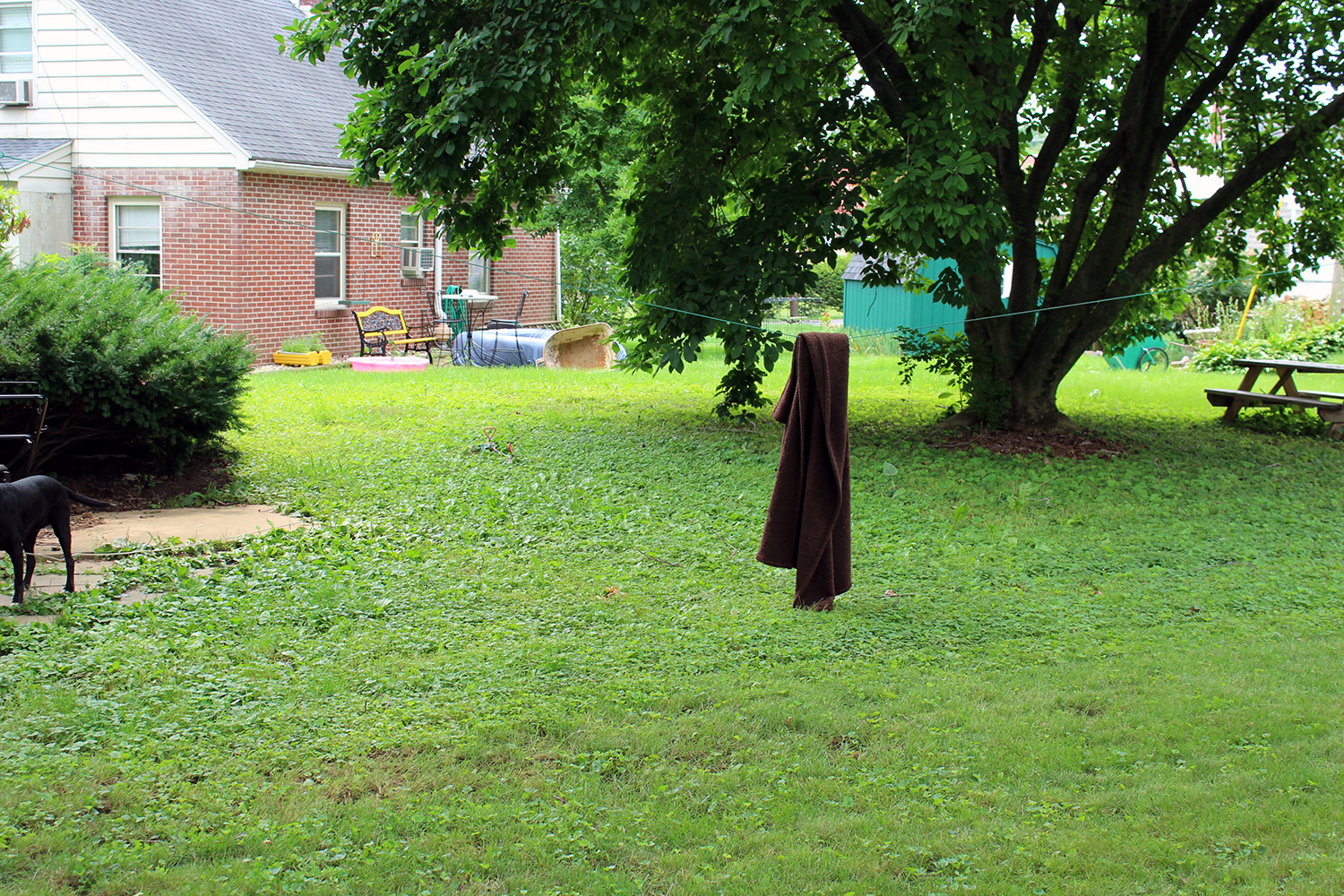

This shot is from my neighbor’s yard across her backyard, ours, and then the neighbor on the other side. Had I taken this shot before the last 4 weeks when we were in drought-like conditions would be brown, green and brown. Kentucky Bluegrass is particularly prone to wear from heat, drought and lack of rain. Our neighbors lawns were dying and ours was still a fairly lush green. That’s how little KB is left out back and increasingly less in front and on the sides.
This might not look amazing, but keep in mind the whole yard was mowed about a week and a half ago.
Also worth noting that when we moved in, about 10’ around that Magnolia was all totally just dirt with little to no life within it.
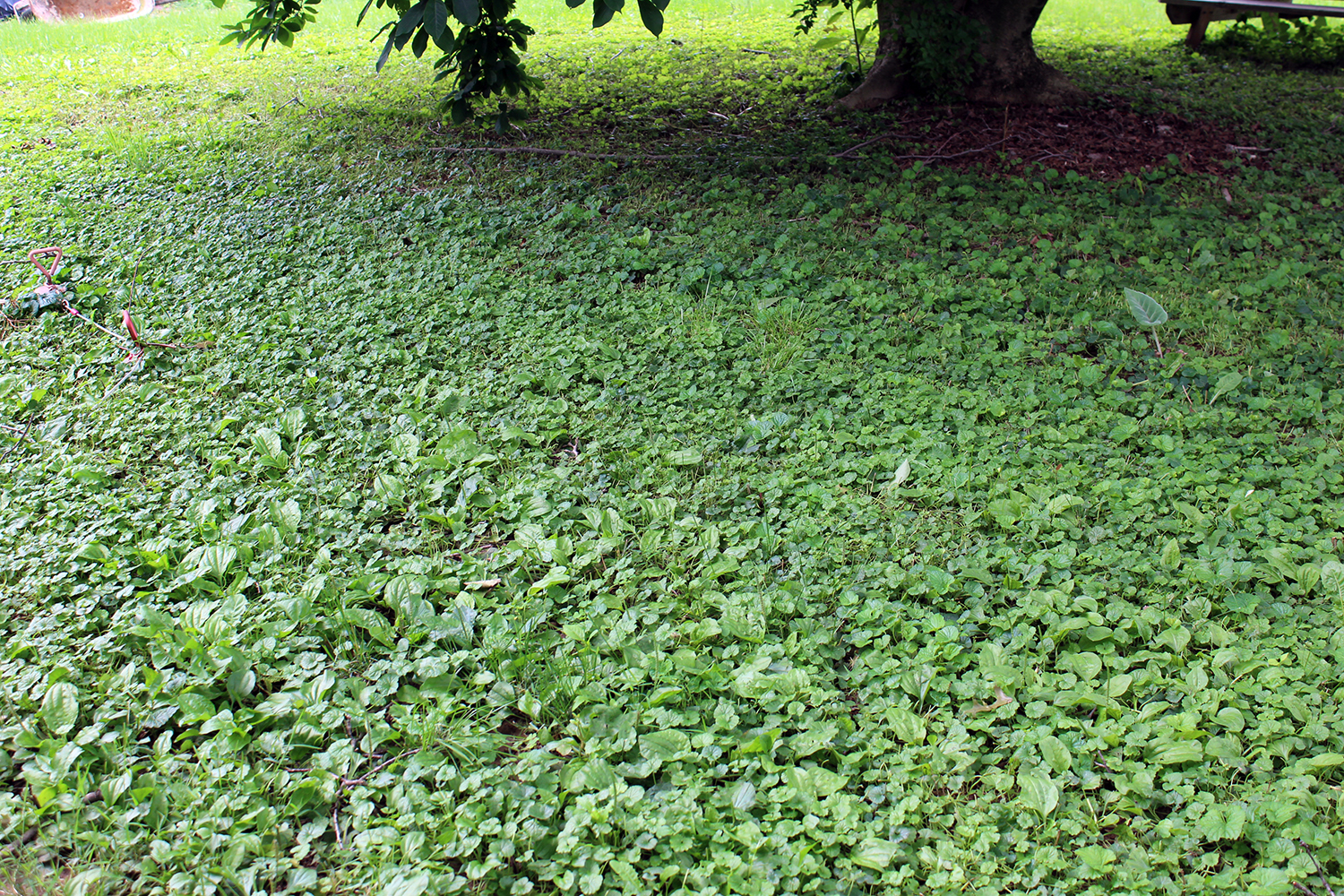
Closer shot of the cover. What you’re seeing is mostly clover and violet with some broad leaf plantain mixed in. Some dock and mulberry as well.
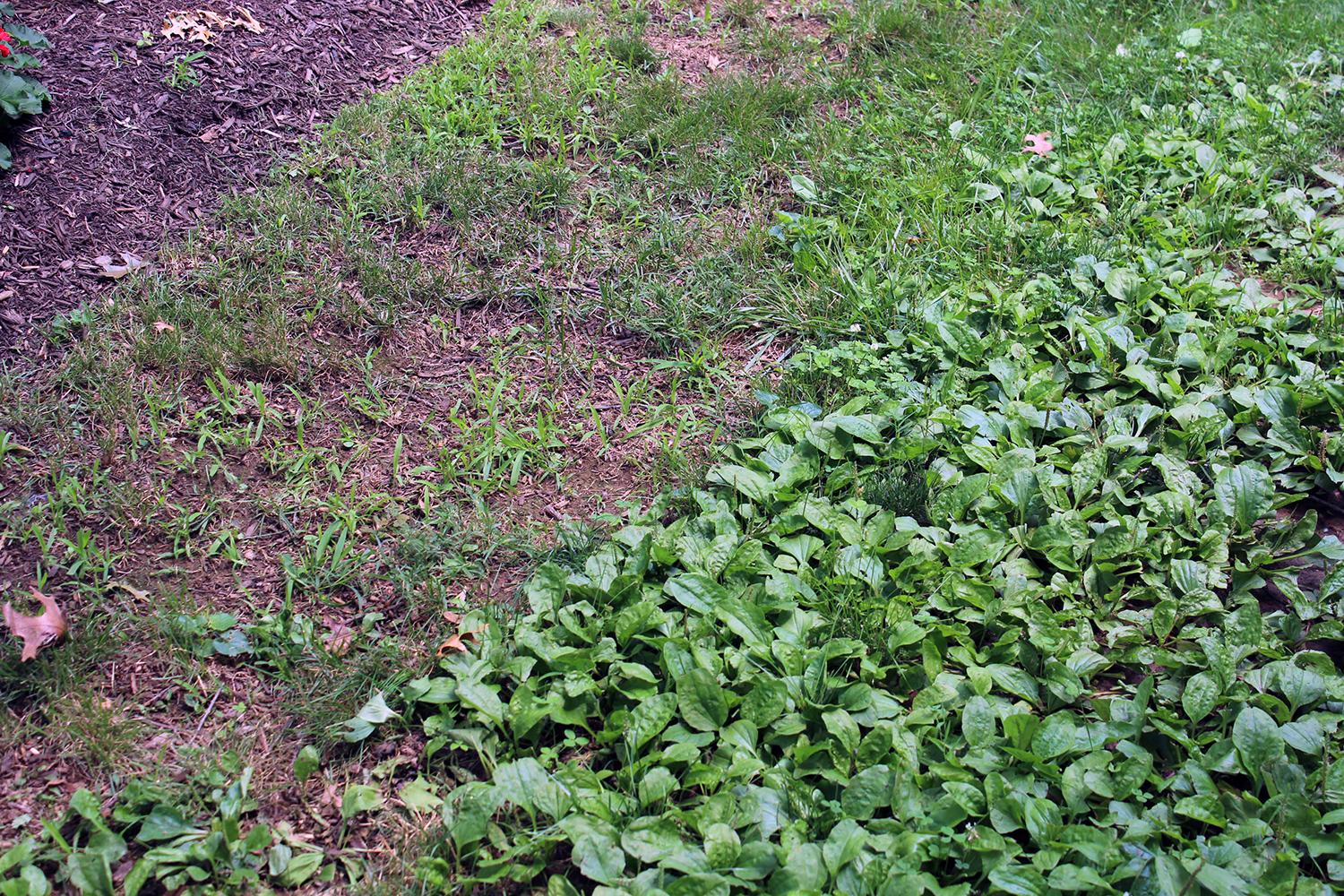
Guess where the property line is.

So what did we not do?
The biggest things are the obvious ones: we don’t spray, we don’t seed.
Here are the things with some intentionality and an ear towards what seems permissible:

  • Mowing as little as possible. We use the Magnolia as a cover for not
    mowing a larger area around the tree and that serves as a starting
    point for new growth that has been spreading outwards.
  • Leaving leaf debris on the ground until the absolute last minute. Basically
    ensuring as much ground cover as possible until everything starts
    growing again in the spring. We then dump the debris across the
    street where things have really, really gotten wild.
  • Transplanting the trees that start growing up in our yard (maples, tulips, and oaks) to the “park” across the street. I do this probably upwards of a dozen times per year.
  • Mow over garlic mustard before it goes to seed.

What we’ve ended up seeing is a succession. That area around the property line shot was basically just English Ivy when we moved in, going towards the back of the house where basically nothing grew. The plantain has taken over on its own just by having been given the chance.
Naturally, it’s not a native, but it has offered a better precondition for the violets, clover, and poke to come through. As you can see in the back, the plantain isn’t gone, but there is far more growth surrounding it and the natives shine through the most. We get a good bit of mulberry too these days, but our pokeweed is fantastic. We effectively get a tree growing outside by the time the berries ripen.
Our front yard reflects this, but at a slower growth. The front of the house is the only area we’ve actively planted. Bee Balm, Butterfly Weed, Golden Rod, and a few others that haven’t taken quite as strongly, but the soil in that area is excellent. Enticing enough that some Carolina Wrens were nesting in a tulip poplar basket hanging off our front porch and seemed to enjoy the cover.
We get a way with a more wild looking area by just putting up a shitty cheap wooden mini-fence around it. But we regularly get hummingbirds and a ton of insects out there. Even had some mallards a few years ago and a lot of rabbits. The lawn surrounding that area is increasingly violets and clover. If we gave the poke more of a chance, it would eclipse everything. As a result, the poison ivy around the porch has dwindled to a few plants from being completely intertwined before. Thistle is far less common and there has been no garlic mustard over the last two years. Lots of speedwell and lady’s thumb as well.

So just thought I’d share this. Thoughtful inaction based on “how far can we push this” and still getting an increase in wildness around a house where the township sprays 3-4 times per year, but we’re still going strong.
Far, far, far from ideal, but if we were able to let it go completely, it’d be a forest within decades.

3 Likes

If and when you owned property, would you seed with prairie mixes or some native seed mix? Would you also throw nuts/seeds/acorns or seedlings in starter trays and then set them out once they established? Is part of “letting it go” being that it’s a rental and you may not have as much leeway, or assurance it won’t be ripped out once you leave? Or are you saying you would “let it go” regardless?

1 Like

I’ve also transitioned away from weeding, feeding, and seeding the last several years on my 1/3 acre. Reduced mowing to once every 4 weeks, so maybe 5 or 6 times a year total. The yard stays green on its own with what wants to be there.

Relative to what @andrew is doing with Feralculture, this seems like small beans. But, it’s really the shift in mindset. Not everyone will be blazing trails.

1 Like

Both.
I hate the idea and look of manicured landscapes and seeing the feeling of accomplishment that people get for subduing their surroundings as a ritual of mindless and toxic complicity. So if I can wedge a non-ideal situation in that direction, then fine. That it happens to serve as a 4 year experiment is a net positive. There’s a solid chance that my landlord may reseed the entire lawn and that the next tenants will do like the previous one and pay the same lawn service my neighbor uses. So I don’t want to sink any money into anything too intensive (though I’ll likely take our Bee Balm and Butterfly weed with us after relocating the goldenrod across the street [the long term intent anyways]).
That said, I was fortunate enough to learn very early on that good intentions may not be the best move. Control isn’t my forte and I’m not driven by notions of design to be too married to any particular notions. So “let it go” is my overall strategy, but that’s peppered with intentional efforts to transplant or plant. We did drop a lot of seeds out front, but not much of them took off because we shot ahead of ourselves and the soil wasn’t ready for them.

It really depends on the land we end up with. Right now there are a lot of options from fully forested to clearings around structures and then forest. Some of what we’re looking at is larger parcels slightly removed from state land, others are relatively smaller but butt against game lands. So let’s go with the cliche answer and say, “depends on what the land wants”.
One thing for certain is that I’m going to be transplanting some paw-paws for damn sure. It’s one of the few things we have a lot of access to out this way and less so in the target locations.
My general approach is a combination of transplanting and/or open pollination. It’s too easy to get really invested in starters only to be disappointed. Open pollinating gets the end result without the tease of seeing something start that wasn’t going to take in the first place.

1 Like

Did you stop watering the ‘lawn’ after a while, or are you watering it less now? My friend who’s renting a new place complete with a dead lawn soon, is curious.

As I walk around a middle class neighborhood on Spokane’s south hill I get to observe people’s experiments. Usually I want to talk to them but they probably don’t know—what stage of the native forest they’re trying to interrupt with their gardens. I see Rose bushes sticking straight out of lawns with no beds, much more lenient practices on grass and certain weeds as far as encroachment on crops. I always see these as steps up from the usual Euclidean policing, where they weed to leave spaces clear of all plants in beds, and they even weed to maintain the rectangular bed shapes. This is sickness in their minds to me, and it recalls the time I was a gardener forced to keep weeds off the shoulders of beds, not as sick but still often disregarded whether the crops even needed the protection (was merely for aesthetic or as the owner put it, ‘pride’). Another popular madness is to export the leaves of their trees and import some other debris for mulch. Face : palm. I wonder why people don’t just leave everything be, except for a certain radius around the crops they’re (trans)planting or seeding. Maybe you have some thoughts on that too. You mention soil not being ready for those plants. Maybe this is the culprit and not competition from weeds.

1 Like

I never watered it. PA gets a good bit of rain, but with climate instability drought like conditions can happen for a strong spell. Definitely a newer problem. Actually with this spring’s heat and drought (about 4-5 weeks without a single significant rain) a lot of ponds actually dried up completely and haven’t come back in the area. Pretty crazy sight.

Dealing with being shunned by neighbors is pretty easy for me. I have devout Christians pretty much all around and couldn’t care less about pissing them off. That’s the kind of pressure that keeps nearly all maintenance work in line. "What will the neighbors say?"
Once you get past that, the real threat that you’ll run into is the county. My landlord claims to have gotten more than a handful of complaints from the county and threats of fines. I’ve never seen any of it, but I don’t doubt that at least some are true. But for the most part, people don’t “let it go” typically unless it’s a sheer money or time issue. I’m sure that’s what my neighbors have thought, but I couldn’t care less personally. At this point we can get by quite often mowing the front 2 or 3 times before doing the back.
I think what you’re running into is more or less the typical gardener/suburban aesthetic.

In this case, I’m doubting as well that many people are facing that. I’m sure it happens, plants can not take for plenty of reasons, native or not. The soil when we moved in was filled with junk from having transplanted Walmart potted flowers into the front. Took a while to get that junk out and build up the soil, but plants not taking was a combination of soil not being able to support them at the time and the layers of growth not being developed. So when a blueberry bush didn’t take, the 2 or 3 species that I planted in it’s shade went as well.
I was really stoked to see some blue cohosh that we transplanted last year which didn’t seem to take actually made it pretty far this year. Probably would’ve lasted better, but my aging and now deceased dog (RIP Noko) was kind of sliding off the porch around it to go outside and ended up knocking over the surrounding plants that gave it the partial shade it needed.

The moral story of “let it go”: those root systems are struggling and as the soil builds and the manicuring wanes, you can get some really awesome surprises.

1 Like