Going to Alaska? Gear list, please

Fairfield has waxed canvas and non-waxed. Waxed canvas is bad new for tents (in my opinion) as it is extremely flammable (the wax is paraffin, or petroleum based wax). One coal shooting out of the box stove and you’re done.

Maybe you’re thinking the stuff here? They have 6.25 oz untreated cotton canvas for $6.01/yd http://www.fairfieldfabrics.com/625-oz_c_50.html. Their 8oz is $5.85 per yard.

Yeah, I definitely didn’t intend to link to waxed canvas.

@TBeal, first off, to be fair, the Altai Hok bindings are not manufactured by Altai Skis, so i didn’t mean to impugn the skis. they’re compatible with many bindings.

My uses of the Hok were mostly in temperatures yielding very cold snow, and usually the kind with some crust on the top and fine powder or chunky crystal powder under the crust. The other thing that comes into play is terrain. My use was in a wide, flat river valley with a frozen river, cutbanks, and islands. For the most part, I was in ares where there were no trails. When I left the river, I had to scale vertical banks and navigate willow or alder thickets to get to frozen bogs with lots of deadfall and bushy junk in the snow. There are no significant hills to speak of in the immediate vicinity of the particular camp I wintered at. I had hoped that the Hoks would work in this environment. I have the longer ones, and with or without a small pack, I sank everywhere. When off the river I’d get hung up on all sorts of tangles under the snow, curse the gods, and wish I’d had snowshoes. I have nothing bad to say about the Hoks in general, just that they didn’t work for me in this application.

David said they worked fairly well when he used them in slightly warmer conditions with wetter snow. But David also has dogs, and I don’t know if he was skiing on his own power, or being pulled. I don’t remember how the bindings broke, and didn’t see them after. He did say something like, “yeah, I knew by looking at them that they would eventually break there, the plastic is too thin, and it’s plastic in the cold. It seems like a design flaw.”

Maybe my experience was simply a matter of low skill level. I don’t think that’s the case entirely, because there just wasn’t enough surface area for floation and that’s just physics. But I’m sure better technique could mitigate the tips constantly snagging on submerged obstacles. There was a day when, after crossing areas with 2’ of off-trail crusty powder, I got on the trapline Glenn and Jeff were putting in, and very much enjoyed the Hoks on that trail that had a bit wetter snow (it started snowing wet snow after I came out of the forest onto a lake, and there was about 1/2" of wet snow on the trail.

So the question is one about tools for season, terrain, trail/no-trail, snow depth, use, and a lot of other variables. It’s my belief, that generally speaking, those conditions generally favor snowshoes in the Yukon-Tanana valleys. It is my belief that the cultures in the area (Athabaskan toward the interior, and Yup’ik toward the lower Yukon) probably reached the same conclusion through testing, and not through lack of technological awareness.

My bias is toward minimalism. I never once found myself on snowshoes wishing I had skis. I do recall hikng out a logging road on foot, sans snowshoes, and wishing I had skis. I definitely wished I had snowshoes while I was on skis, and not infrequently.

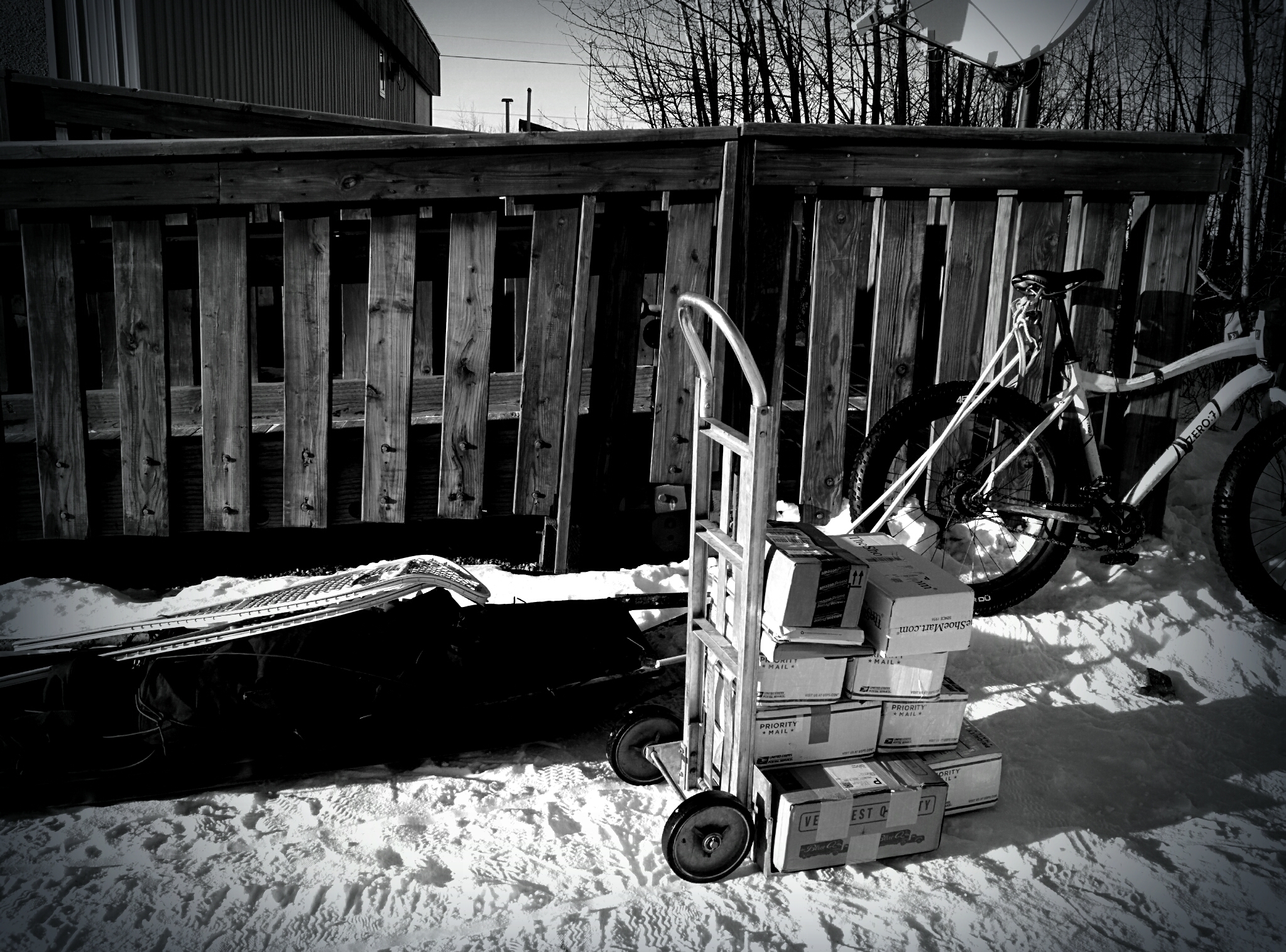
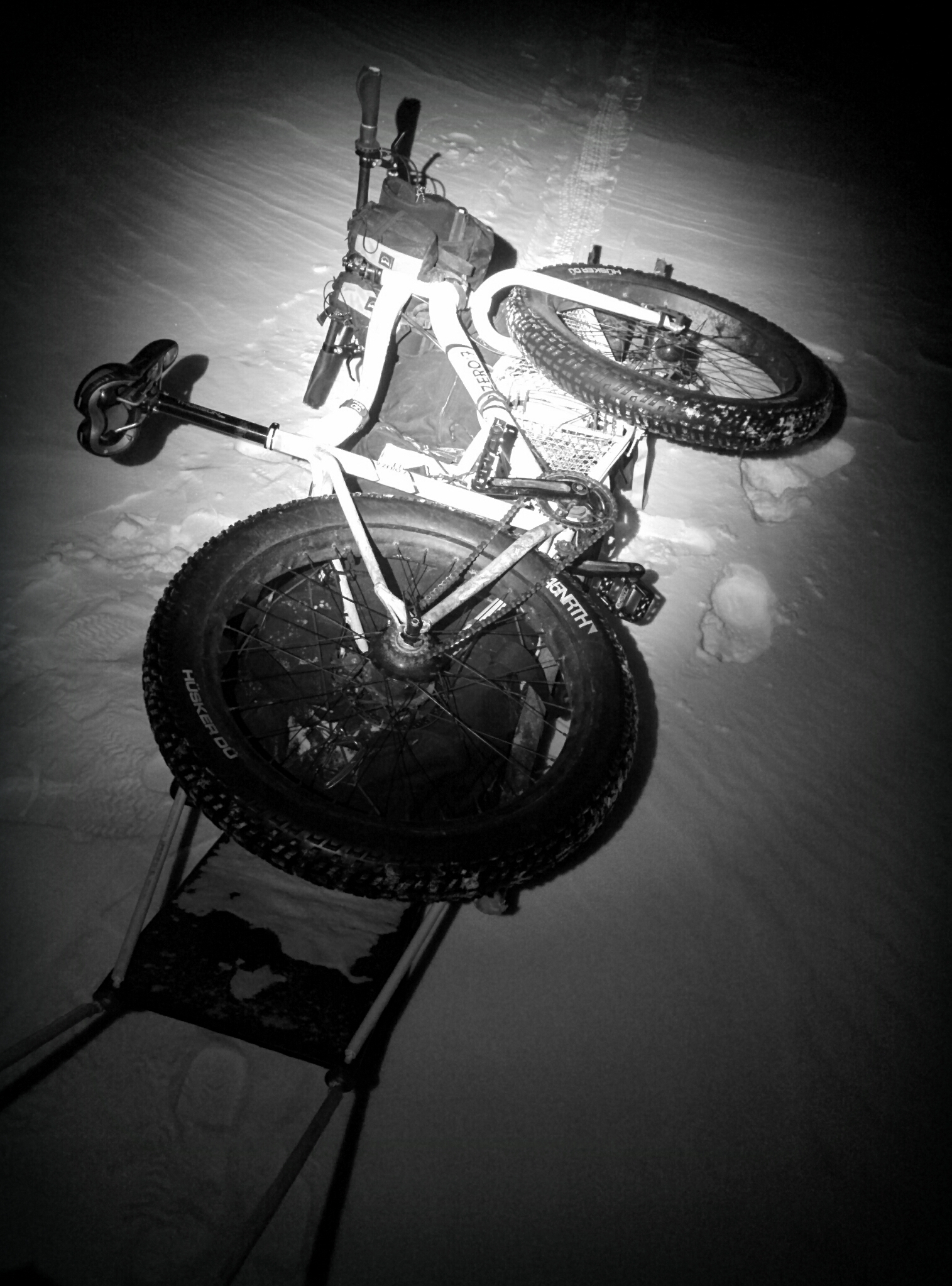
My other main use-case is pulling a sled behind a fatbike, generally for trips of 8+ miles per day on snow machine tracked rivers and/or sled trails. In this mode, I carry snowshoes for the not unlikely event that the trail will be blown in or the float too thin to prevent the tires from falling through. When those things happen, I toss the bike on the sled, and put on snowshoes. Skis don’t seem to be the best tool for this either.

So, I have Hoks, and I’m not sure how much I’ll end up using them or how many more times I’ll pack them from camp to camp. In a sedentary mode with garages and closets and things, I’d probably keep them for the rarer occassions where they would be handy or fun.

@carson mentioned it in the earlier fb thread. @jenniferocious mentioned it to me directly. and @TBeal mentioned it in this thread. so… let’s not forget about footwear.

For various reasons, I ended up with Sorel boots for the winter. They were fine. They mostly kept my feet warm and dry-ish. Knowing what I know now, I would have done things differently. I would have gone with mukluks.

Most of the people we know up here recommend Steger mukluks, the Arctic model with the canvas upper. I think they run around $190. The consensus seems to be to go (at least?) 2 sizes above what you’d normally wear to allow for extra sock layers.

Unless wearing VBLs, it’s a good idea to have 2 liners so one pair can dry while you wear the other, and/or there’s a backup if you end up in water. I got an extra pair of Sorel liners, and I think they were about $27. Somehow I missed the fact that they are synthetic until I already had 2 pairs and was back in the woods. Steger sells their liners, pure wool I believe, for $20. If I had it to do over, I’d buy the Steger wool liners, even if I had Sorel boots.

Snow Walker’s Companion recomments some kind of wool felt material for DIY liners, and the specific name escapes me now. I think it was David who recommended making liners from heavy wool blankets. Their may be a liner pattern in SWC, actually.

In other words, if I was doing it over, and was buying footwear, I’d get the Steger Arctic in size 14 (I think that’s the largest?) since I normally wear a size 12.

On the question of DIY winter footwear

I am not well informed on Athabaskan winter footwear for this region. Caribou have been present in parts of this area at varying times, but they do not currently migrate through our area in significant numers. I suspect the traditional winter footwear was something like a moose (which Steger uses) or caribou mukluk.

Toward the coast, Yup’ik peoples more commonly used fish skin boots. @dennis, I hope that you look into this, as I feel it is currently an under-used material that’s readily available here. If I remember correctly, chum and king salmon were the preferred species for footwear.

Farther north, caribou boots were used in various configurations, some with fur on. I believe the fur faced inside on the boot, and outward on the sock. Vilhjalmur Stefansson is my reference for that, but it’s hazy now.

If I was making a pair of mukluks based on relative availability of materials, something along the lines of the Steger (moosehide foot, canvas upper) would probably be my first project.

Chum salmon runs here are good, and if I knew more about using fish skins, I would definitely consider this a real option.

1 Like

How would you all feel about attempting to get a small gift economy started, with things like folk’s extra gear be the initial way to kick it off?

I think @primalwar mentioned a book exchange too. I’ve started a new Gift + Exchange forum category. It’s currently public, but maybe we should bring it into more private status. I’ll start a new thread over there, and don’t want to derail this discussion, but it would be very cool to get something going.

2 Likes

I know how to tan fish skins. Pretty easy. I posted a link for bark tan instructions.

I don’t know if salmon is really the ideal skin for shoes. The sockeye I was helping my friend bark tan were pretty thin. Maybe Kings and Chums are thicker skinned? I could see kings being a possibility.

I don’t know how the Yup’ik tanned their salmon. My guess is they used urine. I don’t know how to urine tan. There are instructions on the web, but because I haven’t done it before I can’t recommend they will work. Urea forms ammonia and that creates a basic environment (12 pH) that likely breaks down fats and kills bacteria. But I don’t know how that makes it waterproof. Sounds like alum tawing, which is not water proof. Maybe the added fats make it water proof? This is also known as “oil tanning” which I don’t fully understand yet. Braintanning is basically oil tanning with the added step of smoking.

I imagine that you could urine bate (tanning term for getting shit out of the hides that will make it rot), wash repeatedly to get to a neutral pH, dry a little, rough up the membrane side, put in warm emulsified oil/water, wring out and stretch until dry, and smoke. I would maybe even consider bating in urine and salt water, kind of a bate/pickle to preserve the hide through the tanning process.

The best source for this stuff is likely Lotta Rahme’s book Fish Leather: Tanning and Sewing.

I posted a link to some instructions here.

1 Like

Steger leather is split, I believe, the suede part is put to the outside and the outside or smoother part is turned in. I suspect for looks. I wish they would put the smooth side out as I think it would repel wet condition more easily.I’m on my second winter with them and am very happy with how they are holding up, they are my only boot with the exception of a pair of rubber boots for real wet, standing in water conditions.

That is a good report, different snow up there than I have here on the Maine coast. It is more dense and packs even in fluffy snow I don’t have much of a problem with ski sinking and getting tangled. There is the occasional pocket of bent over thicket that would cause any mode of transport to get hung up, I go around such things if possible. This past winter I used snowshoes more than in the past and can see the advantages in some areas. I will keep both open for use and choose for the task at hand.

I found this link to Alaska Native clothing from the Smithsonian. May provide some inspiration.

@dennis

I don’t know if salmon is really the ideal skin for shoes. The sockeye I was helping my friend bark tan were pretty thin. Maybe Kings and Chums are thicker skinned? I could see kings being a possibility.

We only have 3 of 5 salmon species in the interior: king, chum, and coho/silver. Parts of Yup’ik territories have all 5, and in the book linked in the other thread, the elders specify king and chum, and not the other 3.

That doesn’t necessarily make them ideal, but being able to pull 300+ chum from the river in a day (with a fish wheel) is a different risk profile than maybe or maybe not getting a moose.

With any tanning you need a fat source too. That rancid beef tallow you have is not best but will work. The big Cascadian oil source was Thaleichthys pacificus (Candlefish/Smelt). Boiling hooves of ungulates will provide some neetsfoot oil. Rancid bear fat is the best.

On the topic of toboggans and canvas

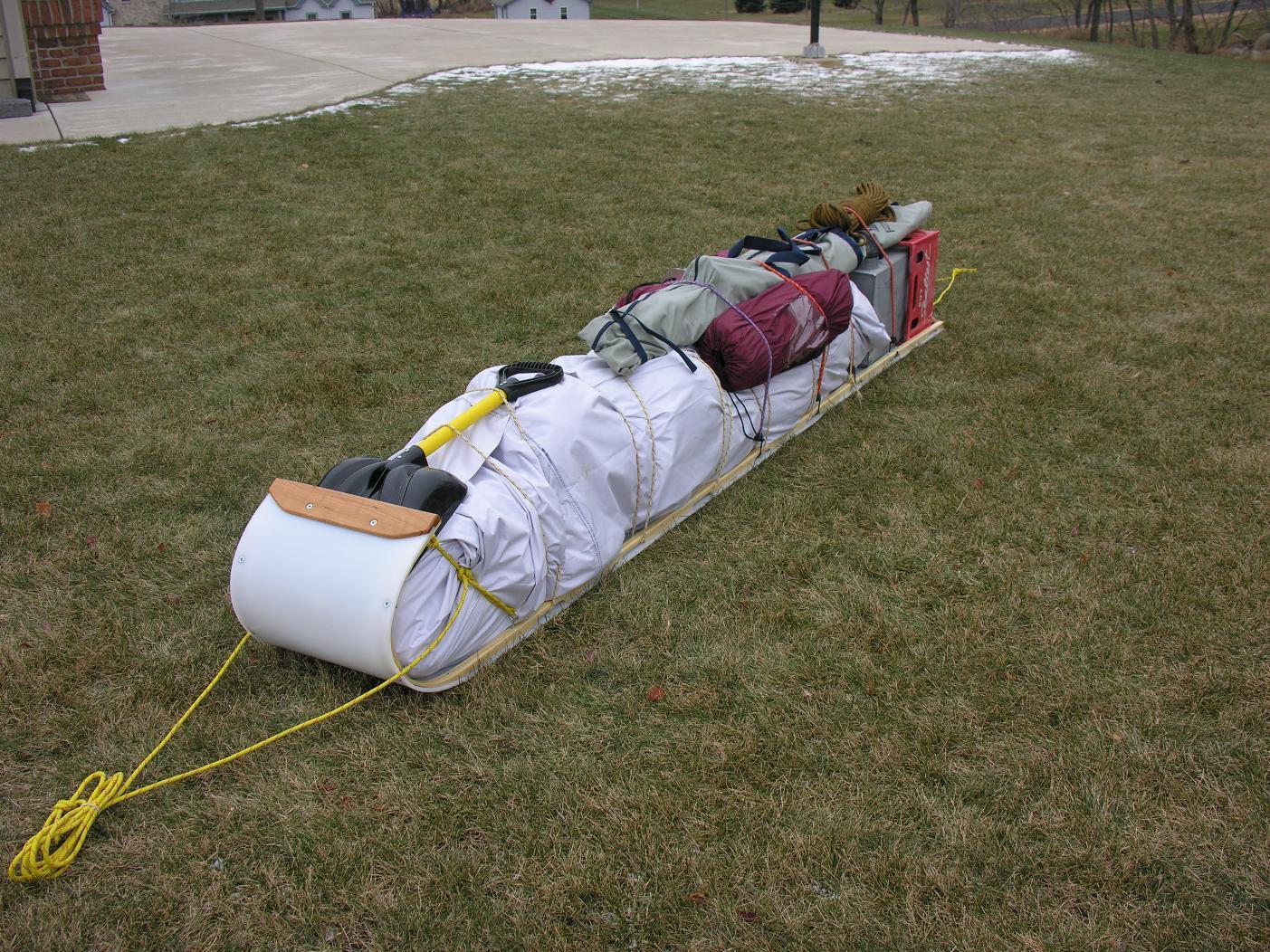
I’m currently of the mind that a birch toboggan with a canvas tank custom fitted for securing gear is the way to go.

Yo @david, you listening? Have pictures of yours?

Here’s roughly what I’m referring to, note the white canvas running the length:


Source of image

My plan is to then make custom canvas duffels made to the sled’s width that fit inside the tank in a modular fashion. I am debating (with myself) whether to use oil cloth for the duffels, so they may be used as semi-dry bags in the canoe also.

Just wanted to throw that out there for purposes of any potential canvas orders.

Ventile Tent

Here’s a website selling EtaProof L34 DWR Impregnation 5.6 oz cotton tents. EtaProof is essentially Ventile. Not cheap at all. $1420-$1920 CDN.

Yeah, not cheap. I’ve seen places selling regular duck canvas wall tents in that price range too somehow. Did you see the Ventile thread I started?

@andrew I saw that thread. Ventile is way too expensive for me right now. In my research, I’m trying to exhaust all cheaper options before I go with something so pricey. I’m seeing recommended (by folks on snowtrekker.com forums, like Kevin Kinney of Empire Canvas Works) materials for $5-$6/yard. If I need around 12 yards (just guessing) that’s $60-$72 just for the fabric, which equals almost what I’d likely pay just for shipping for Ventile.

Kevin Kinney recommends and uses Pillow Ticking so now I’m looking into that. Pillow Ticking is what down pillows are made out of and is a very tight cotton weave to keep the down from sneaking through. It’s also $5-$7 a yard and available everywhere. In Snow Walker’s Companion, and elsewhere, recommends people use egyptian cotton sheets. Everyone makes clear that it’s not the same as real egyptian cotton, but people use it anyway.

Right now I’m debating between the Fairfield canvas and pillow ticking. And I’m thinking pillow ticking for an anorak. My only concern with pillow ticking, beyond whether pillow ticking will just rip to shreds, is whether I can make it mildew and fire resistant. I’ve seen too many moldy tents to not do something before hand.

Yeah. I brought up Ventile in the specific context of what’s the best overall, and agree that it’s real expensive. I can’t afford it right now either, but I am considering making a special effort to get some later.

David and Jeff are two of the more experienced people you’ll find, and they got the Fairfield stuff. Maybe there’s better stuff out there, but that’s what they got, and I’ve touched it, and they believe it’s good for the task at hand.

The climate such that it is here, I suspect mildew can be avoided by drying thoroughly before storage. That said, the chemicals probably saved me a lot of grief when I had to leave camp after sticking an axe in my foot. It was below freezing when I left and the tent was packed with ice on it from when we moved it last, and nobody was around to dry it out for a few weeks of damp spring weather. That was a case of accident (user error), and having my mistake softened by chemicals.

I know canvas can catch fire, and that can be super dangerous. I believe that Snow Walker’s Companion says or implies they don’t use fire-treated fabric, and the consensus vibe I get here is that Alaska Tent & Tarp has adopted their “no stove jacks without fire-treated fabric” out of liability concern, and doesn’t necessarily reflect the optimal point on the risk-reward scale of utility. The cheap dome tent I happen to be in right now has a huge fire warning tag because of liability issues too. I’m not saying it’s not a real concern, but it does seem to me that people with more experience than I have are against using fire-treated canvas.

BTW, I think I have 10-20 yds. Of 10 oz. of the robust duck mildew/fire treated stuff up here that I may not have a use for. That doesn’t help you in America today, but it reminds me that someone has mentioned maybe using fire-retardant canvas on panels closest to the stove jack in a targeted manner.

Actually the hok bindings gave us blisters with mukluks… A very poor design in many ways.

Fire retardant is pretty damn toxic stuff. Putting your stove jack out the side wall or end wall and extending the pipe out a ways will keep your fabric safe. So long as it is on the downwind side of the tent.

The main reason that snowshoes are an advantage to skiis is that they provide a wider trail “float” for a tobbagon or sled to move through. The webbing sheds the snow with each step while skiis will collect a lot of weight that way. Skiis without skins are too slippery to pull a heavy sled very well, though skins or cordage can be used to add traction… I love skiing and we usually bring a pair on our trips, but for all terrain travel without a trail, snowshoes are better in my opinion. Unless you have reindeer to pull or carry your kit

1 Like

David, do you use something to keep mold away [in canvas tents]? Do people just use a borax soak?