
I have long thought about writing about plants, and now I finally managed to write a short piece, drawing together latest scientific findings from several books and articles and combining them with personal experience. I am, of course, not so sure how it turned out - this is the first time I write a longer piece for “publication”. If anyone here is interested in the topic, I would love some opinions before I publish it on my website, en.numthang.org, and maybe look for other websites to feature this essay as a way to promote our own Patreon campaign (thanks for the idea, @andrew and @jenniferandrews!).
Is it readable? Is it interesting? Do I provide any new information or is it already common sense? Do I repeat myself? What about quality, not only substantial but also structural and linguistic (I’m German)?
This is the first draft:
On the personhood of plants
…and our relationship with them
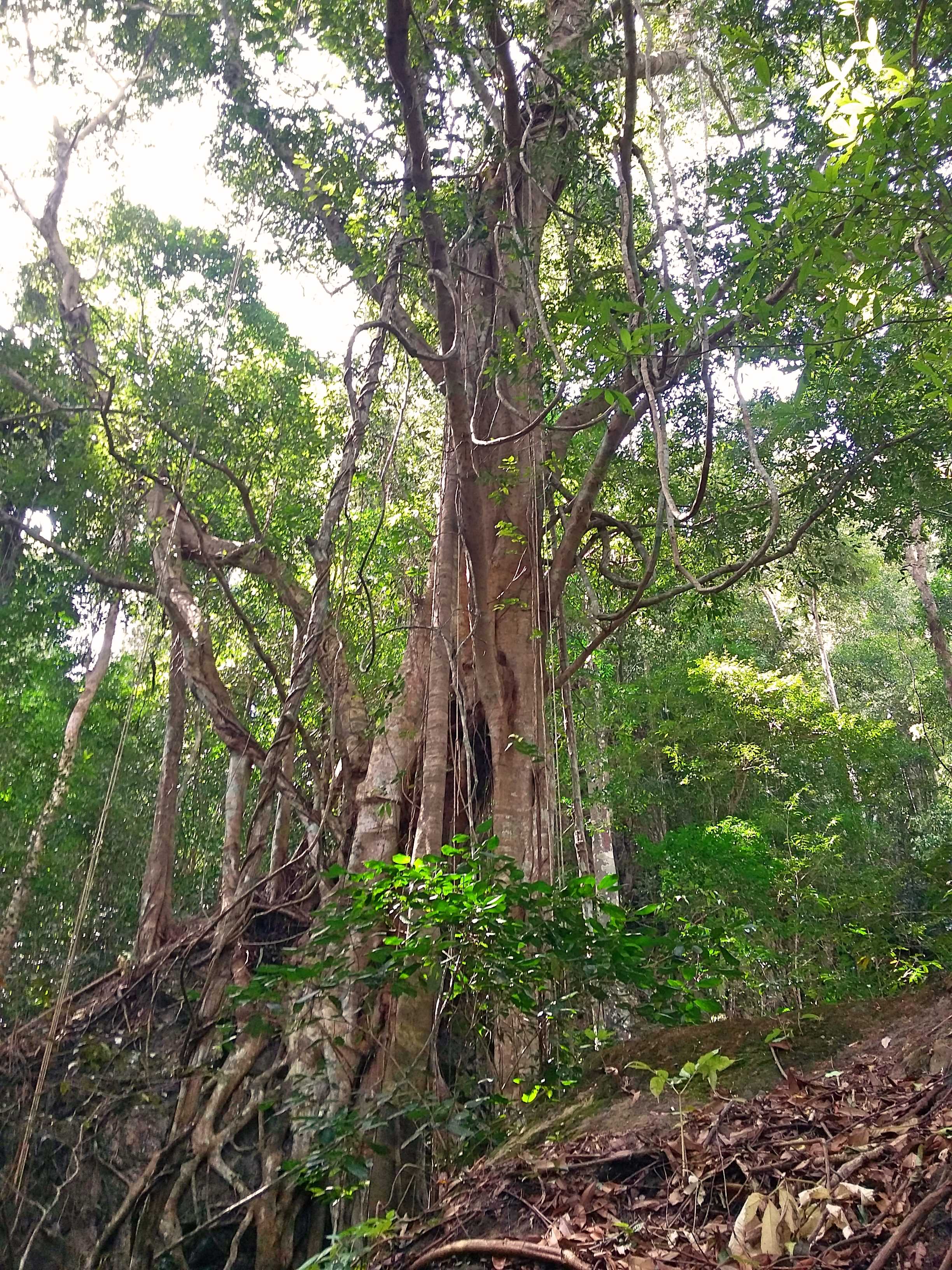
“Here I stand in awe, deeply moved by the sheer beauty you cast forth… I feel small and minuscule in the face of your size, your age, your experience, your wisdom. How many cycles of the sun, the moon and the seasons you have seen, how many times you have felt life and death, suffering and happiness, grief and joy. How sophisticated your branches wind to grow towards the sun, how elaborate your leaves are spread, how elegant they dance in the wind; of what inconceivable complexity is the vast and deep network of roots from which you draw just what you need, never more. You give more than you take, you know your place, you are humble, altruistic, generous and friendly. You know this place better than I ever will, and you understand its will better than I can ever fathom. You are my inspiration, my paragon, and I wish to learn from you as much as you can teach me, so that one day I will be as wise as you – so that one day I will become you.”
- Prayer to a tree
Plants are my life. It has been like that ever since I was born, but it took me until very recently to rediscover this inherent connection.
Over years of naive teenage ignorance, I viewed plants as a mere décor for the human drama, a nice background for the real things to happen in front of it. As I gradually rid myself of the anthropocentric worldview that is the defining standard of our global agricultural society, I became aware of the fact that plants and the ecosystems which they create are much more than I could have ever imagined.
Plants constitute the bulk of visible biomass in the biosphere, they are one of the most essential life forms and without them, life on earth would be unthinkable. Still, they play a minor role in our everyday lives, and are mostly seen as a means to an end – mainly producing oxygen and food so that we humans can live, or just decorating the terrifying concrete mazes we create.
The journey began when I decided to drastically change the way I live and moved to a small permaculture project in the South of Thailand in the beginning of 2014, but the foundation for this radical step was laid since my early childhood: we spend every single vacation out in Nature, if in the mountains of Austria or on the island of Bornholm, Denmark, we hiked, swam in the sea, played in the conifer forests or on the cliffs over the foaming waves of the Baltic Sea. To this day I remember vividly how a friend of my parents ran over to me, startled, as I was peeling the bark off of a young tree with my very first pocket knife that I received as a gift on that very day. “The bark of the tree is exactly like your skin!”, she exclaimed as she hastily pulled my hand back and stroke my forearm.
I had always had a subliminal but undeniable interest in plants. During my school years I worked as an intern in a tree nursery close to my hometown in the middle of Germany, on an organic farm with delivery service called “Grüner Bote” (Green Delivery Man/Messenger), and in Munich’s botanical garden. I trimmed the hedges of our small home garden and helped my grandfather in the woods he owns next to the Diemelsee. In all those contexts, plants were still just means to an end.
But as I grew increasingly frustrated with the way we live (which clearly doesn’t work, neither for the humans – poor or rich – nor for the myriad of other living beings that surround us and that make up this vast interconnected network that Daniel Quinn calls “The Community of Life”), I started following the tracks of human errors, mistakes and wrongdoings deep down the rabbit hole of the pitiful 10,000-year-old history of our civilization - until I arrived at the conclusion that we humans are inevitably a part of Nature, no matter how hard we try to alienate ourselves from it and try to conquer, manipulate and dominate our environment. I had to once again become part of Nature, to reconnect with Nature, to rewild.
We are what we eat, and plant food makes up for most of our daily calorie intake; just three out of over 50.000 known edible plants (rice, wheat, maize) provide 60 per cent of the world’s food energy intake. Food was always an important issue for my parents; they made sure all our food is organic and fresh, that we eat lots of raw fruit and vegetables and no processed foods (as well as no refined sugars or dairy products for the first years). Now that I think of it, my parents tried really hard to build a deep connection with what (or whom) we ate, but their efforts remained fruitless for the time being as I discovered the artificial joy of Triple Whoppers oozing with fat from GMO-corn-fed beef patties, fueled by boosts of various puberty-induced hormones and a culture that worships the United States in almost religious manner.
When I now take a look around and see how people treat their food, it makes me sad. Most products in any supermarket are processed to the extent that you can’t possibly identify the plants that they were originally made from. We tend to think that food is just another thing that civilized humans produce, like glass or plastic. This cannot be further from the truth, since we literally are what (or whom) we eat: our bodies are made of the things we consume, old cells are washed out of the system and new cells are created from the building blocks that arrive in our stomach – so, in the truest sense of the word, we are made of plants. But plants do not grow to be food for humans, they grow because they have their own individual, autonomous and purposeful lives. Therefore, they deserve respect.
It is the discriminating mind of a culture of anthropocentrism that reduces plants to the lowest order on Aristotle’s scala naturae, on which we humans are on the very top, with other animals just below us (Hall, 2011). A view that we didn’t manage to update for the last 2000 years, and that is yet so blatantly false for everyone studying the workings of ecosystems – and, as a matter of fact, for all the primitive foraging societies that still exist in the corners of the planet where our dominant world culture hasn’t yet stamped them out.
If you live among free plants, in the wilderness, you view them one way. If your image of plants comes from glossy pictures on food packaging, the few puny flowering pots on your window sill, the television, ornamental plants incarcerated in concrete blocks, asphalt and metal bars along the sidewalk, and manically trimmed front lawns, you’ll view them another way.
The more time I spend around plants, the more my perception of them changes. My appreciation for their beauty, their individuality, their dexterity, their cleverness, their strength, their robustness and their altruism have gradually increased ever since I started to make plants the central part of my life with the adaption of a permaculture lifestyle. I see them as companions, as friends, as helpers, and as role models: they lead a lifestyle that is not only sustainable, but regenerative – leaving behind more than there was before. They produce almost everything they need themselves or cooperate with other species. There is no need for factories or fossil fuels to produce what they need, they don’t deplete their environments just to gain a little more comfort. They are moderate, yet content. I think we can learn a great deal from plants.
I have now reached the point where my fundamental view on plants and the role they play in the Community of Life is starting to change in profound ways: I start seeing them as ‘persons’ in an animistic scheme, and in the following I will try to put into words what and how I feel about plants – and why.
First, what characterizes a person? And how do you formulate a broader definition of the term that exceeds the anthropocentric worldview inherent to our culture? Graham Harvey gives a short definition of one of the key aspects that make up animism and how animists relate to their surrounding ecosystem in terms of personhood:
Animists are people who recognize that the world is full of persons,
only some of whom are human, and that life is always lived in relationship
with others. Animism is lived out in various ways that are all about
learning to act respectfully (carefully and constructively) towards and
among other persons. Persons are beings, rather than objects, who are
animated and social towards others (even if they are not always sociable).
[…] However, animism is more accurately understood as being concerned
with learning how to be a good person in a respectful relationship with
others.
He goes on to state that a person is a being who may be communicated with, a being with whom other people interact “with varying degrees of reciprocity”. Andrew F. Smith explains that persons are self-aware, communicative, intentional, familial, social and cultural. Human persons for example can act intentionally and independently; they have their own minds and they make use of them.
All these characteristics are not only found in animals, but also in plants.
Plants are persons, and now it seems so obvious that I can’t understand how I could ever think otherwise. It took me long to connect the dots, but now that they’re connected it feels so blatantly self-evident, partly because those dots are pieces of information that we all already know.
We all know that plants breathe, grow, drink, and eat, but that some things work differently: we breathe in oxygen and exhale CO2, they inhale the CO2, store the carbon and give us back fresh oxygen again. Further, their digestive tract is outside of their bodies, under the earth, and their genitals are generally on the tip of their branches and unfold seasonally, annually or once in a lifetime – we stick our noses into them and call them flowers.
In his phenomenal book “A Critique of the Moral Defense of Vegetarianism”, Andrew F. Smith draws together the latest findings, studies and evidence from the field of plant neurology. Plants can not only smell, taste, and feel, but also see, hear, communicate and think.
Even though plants have no discernible organ of perception, their whole body plays a role when scanning their environment. As we see in the next paragraphs, plants don’t really need centralized organs to fulfill any tasks for them; instead, their whole body is working together to undertake the tasks that our different organs are responsible for.
Smell and taste are basically the sensing and responding to volatiles and solubles, which both animals and plants do almost constantly. Moreover, plants are – like humans – highly sensitive to pheromones: chemicals that are produced and released into the environment to affect the behavior or physiology of other members of their species. Tomatoes release methyl jasmonate as an alarm signal when being subject to damage by insects or herbivores. This scent is smelled by other plants, who prepare for an attack by producing chemicals that ward off attackers. Interestingly, they don’t do this when they are subject to mechanically induced wounding like wind. Another example is provided by acacia trees, who excrete an unpalatable tannin to defend themselves when being fed upon. The smell of tannin is picked up by other acacia trees, who then excrete it, too. This is indeed a form of communication, but more on that later.
Plants feel, they sense touch just as we animals do. I was amazed by the fast reaction of mimosa pudica (also called “the shy plant”), which upon touch folds its leaves together in a matter of seconds. The electrochemically mediated sense of touch is highly developed in plants: roots know when they encounter a solid object, and bushes and trees alter their morphology in response to high wind exposure. I had a velvet bean vine (Mucuna pruriens) climbing up one of the poles of our greenhouse, desperately searching for something above the roof to reach for – an electrical wire was just centimeters above her maximum range. Many times, I watched her tendrils reaching out, stretching, and falling down again; a twine of that length can barely be supported even in windless conditions. I tied the bean plant to the cable with a rope, slightly pulling a lower part of her in that direction. On the next morning, she had already realized that this pull came from the direction of the cable, and twined her arms around the rope, within a day finally reaching the cable.
Sight can be defined as the ability to detect electromagnetic waves and respond to them. Even though plants might not translate light reflecting off objects into images, like we humans do, but seeing like us would give them no particular advantage. Plants need to know the direction, the intensity and the duration of light and possible obstructions to accessing it. They distinguish light from shadow, and track the seasons and the time of the day.
As some recent studies have shown, plants even have the ability to hear. Upon playing the recording of a caterpillar eating their leaves, certain plants were shown to release defensive chemicals. In fact, plants distinguish themselves from others (yes, they exhibit indicators of an internal sense of self) through the recognition of unique oscillatory signals – the movements of each individual plant register on a frequency that is not shared by other plants (Smith, 2016).
A 2007 paper from scientists at South Korea’s National Institute of Agricultural Biotechnology proposed that two genes involved in a plant’s response to light—known as rbcS and Ald—are turned on by music played at 70 decibels. This is about the level of a normal conversation. The Korean researchers found differing responses depending on the frequency of the sound. The higher the frequency, the more active was the gene response.
Primitive people must know this, since they regularly talk to plant persons, pray to them, praise them, or sing to them. The Tohono O’odham (“Desert people”) of southern Arizona and northwestern Mexico have so-called corn-growing songs, one is offered for every stage of the plant’s splendid development (Hogan, 2013). Maori women call out “invocations of remembrance and reverence” when harvesting sweet potatoes. Those calls mean neither redemption nor forgiveness; the women offer praise and thanksgiving while also seeking permission. The women of the Yekuana, who live in the Amazon, are greeting and singing protective songs to young Yucca plants (Smith, 2016). Among the Achuar, where also only the women do gardening, the act of planting vegetables is a sacred ritual where the gardener sings to the spirits (“nunkui“) who watch over the garden. Those magical songs are a form of communicating with the plants and promote their growth.
While I am not yet singing to the plants in my garden, I am fairly sure that they have a way of understanding us humans when we try to communicate with them. I do talk to them, since at the very least it gives me a feeling of a deeper connection to the plant persons around me.
Enough evidence is available to say with certainty that plants are indeed self-aware. Being self-aware means having the capacity to differentiate between oneself and others, and to distinguish one’s own body from the rest of the environment. Plants can not only differentiate themselves from competing or non-competing organisms (when they decide whether to compete for or share resources with their neighbors), but also discriminate between family members and non-relatives, rejecting pollen from plants that share an allele.
They communicate to warn each other (as the tomato plants and the acacia trees mentioned above), but also to find a partner with whom to mate. “Mate selection is elaborate and underpinned by discriminating, complex conversations that precede and follow fertilization” (Trewavas 2012). This means that in optimal conditions they don’t just blindly accept any pollen that bees might bring to them, but they make conscious decisions as to what traits they might want to see in their offspring.
German biologist Robert Zweifel works on translating plant communication so that we can understand them, and he has identified ultrasonic crackling sounds with which pine trees communicate that they are thirsty. They exchange information about weather, soil structure or nutrient availability.
Plants developed a symbiotic relationship with certain fungi, creating vast complex underground networks (mycorrhizae) that are sometimes called the “plant internet”. Plants who are separated by several dozen meters use this network to communicate and exchange nutrients; a square centimeter of healthy forest soil can contain kilometers of those connections.
“Above the ground capitalism rules; but in the ground, a socialist network dominates,” Ian Baldwin concludes.
Wild tobacco (Nicotiana attenuate) communicates not only with other plants, but also with insects. It contains nicotine, which serves as nerve agent that wards off caterpillars. The tobacco hornworm remains unimpressed by the nicotine in the leaves, so the plant has to enact a different strategy. She detects the hornworm through its chewing rhythm and the chemical composition of its saliva, and screams for help using volatile enzymes, which attracts predatory bugs and wasps – the enemies of their enemies – who come and kill the intruders. If this is still not enough, the plant opens her flowers in daytime (she usually blooms at night to attract moths), which draws hummingbirds to their aid. Those hummingbirds are also used by the plant to spread pollen, even though hummingbirds are quite lazy and usually search for nectar close to their nests. Tobacco plants occasionally mix nicotine into their nectar for their genome to spread as far as possible: hummingbirds spit out the unpalatable juice and fly further to search for more – hereby spreading pollen to distant plants. The fact that plants develop such elaborate mechanisms to ward off enemies is due to their sessility, says ecologist Ian Baldwin who studies the tobacco plant. They can’t flee, so they have to be even smarter than the animals.
While it is true that plants have no central nervous system (CNS), they do have a homologous information processing system that integrates the incoming data on light, water, temperature, soil structure, other plants, nutrients, microbes, gravity and eventual enemies like herbivores, and hence coordinates behavioral responses – by sending out electrochemical signals that permit rapid physiological, morphological and phenotypic adjustments (Smith, 2016). They simply don’t need a CNS to have sensuous experiences. Through using this information processing system, electric signals are sent from one plant to the other via voltage charges across cell membranes – the equivalent to action potentials running along nerves in animals’ CNS. Those signals induce rapid changes in hormone metabolism, most notably they effect auxin levels. Auxins are plant hormones with morphogenic qualities that for example induce cell differentiation and regeneration at the site of an injury. They are secreted from cell to cell along elongated cells of phloem tissue called sieve tubes who are essentially akin to synapses.
Furthermore, plants produce a number of compounds found in animals’ neural networks, such as acetylcholine esterase, glutamate receptors, GABA receptors and endocannabinoid signaling components. It is safe to say that the electrical long-distance signaling in plant cells and tissue and the existence of processes similar to action potentials are not limited at all when compared to animals. Of course, plants don’t have neurons, but basically neurons are just “excitable cells” – and plants have these too, particularly at the root apex of the transition zone. Eric Brenner concludes that “at the molecular level, plants have many, if not all, the components found in the animal neuronal system.”
Of course, plants don’t have centralized organs like us animals, but what good would it do if a plant had vital organs such as a heart or a brain if it can’t run away? If one branch would for example resemble the plant’s brain, the whole organism would die if this part is damaged. For the sessile beings that plants are, another strategy must be applied.
Instead of being conducted from a single central headquarter, the functions that those organs have for us are spread throughout the whole body of plants.
Their “brain” consists of hundreds (if not thousands) of meristems, which are located at the tip of the roots and branches of a plant. Those meristems move forwards, divide, and leave behind cells that form the plant tissue. They are considered indeterminate (not possessing any defined end status) and are therefore the equivalent to stem cells in animals, which have analogous behavior and functions.
Since regular plant cells can’t divide or produce cells of a different type, it is up to the meristems to place new meristems along the branches they form, which at a given time will start their way forwards, creating a sub-branch. Shoot apical meristems (SAM) determine where leaves (and, ultimately, the flowers) will grow, what the distance between leaves and branches is, while root apical meristems (RAM) manage the formation of new roots and their direction, splitting up like the eponymous ‘tree diagram’.
Upon sprouting, a seed produces a single meristem, which then divides in two: one growing upwards (SAM), one digging downwards (RAM). The RAM grubs into the soil, detecting stones and nutrients and directing their growth around or towards them. The SAM then makes its way towards the sun, constantly contemplating on the optimal growing direction for adequate sunlight according to the information provided by the rest of the plant’s body.
A straight-growing tree might suddenly find itself in the shadow of another object, it will immediately change its course and grow in a curve, until it reaches the required amount of sunlight again. If the shadow has been there all along (for example from a protruding roof), the tree will grow directly in a diagonal manner, targeting the end of the roof, until it can grow straight towards the sun again.
In annual plants, the SAM will terminate upon becoming what it was meant to be all along: a beautiful flower that will ensure the continuation of its genes in the next generation.
According to Smith, phenomenologists, researchers of swarm behavior, cognitive scientists and philosophers of mind all agree that cognition and intelligent behavior must not result from centralized processes. My grandfather, a dedicated beekeeper, would agree with Thomas Seeley and Royce Levien when they note that “it is not too much to say that a bee colony is capable of cognition in much the same way that a human being is. The colony gathers and continually updates diverse information about its surroundings, combines this with internal information about its internal state and makes decisions that reconcile its well-being with its environment.”. (My brother and I came to the same conclusion (also including ants) over a glass of hot ginger tea on a rainy afternoon here in the garden.)
Michael Marder writes:
“Intelligence is not concentrated in a single organ but is a property of the entire living being.”
May this living being be a plant, a human animal (brain plus body), or a swarm of bees.
Meristems act as individuals in a bird flock, a bee hive or an ant colony: they gather, assess and respond to environmental data in local but coordinated ways that benefit the organism as a whole (Smith, 2016). Brains may provide us with a centralized site of recognition, but meristems operate internally in the exact same way.
The hypothesis that intelligent behavior in plants may be an emergent property of cells exchanging signals in a vast network might sound far-fetched, yet the way intelligence emerges from a network of neurons in our brains might not be very different (Trewavas, 2005). Neuroscience concludes that the brain as a whole function is a centralized commando center, but within the brain there is no commando post – it is a leaderless network, just like the body of a plant. We can conclude that the only difference between us and plants in this aspect is that plants exhibit intelligence without the stopover at the centralized information processing system that our brain embodies.
There are objections as to whether plant intelligence can be compared to our own (allegedly superior) intelligence, but maybe we just think of intelligence in the wrong way. We tend to measure intelligence
in strictly human terms, based on those abilities that we as a species excel at – hand to eye coordination and the ability to manipulate our environment. (Watson, 2014) We humans use our brains to focus our eyes to guide our hands to force our environment to conform to our desires or our will – eventually building and manufacturing skyscrapers, container ships and cluster bombs.
But, as Paul Watson notes, “intelligence is relative; it evolves to fulfill the evolutionary needs of a species. All successful species are intelligent in accordance with their ecological position […] A complex intelligence exists within every sentient creature relevant to its needs. We as humans cannot begin to compare our elaborate intelligence to the complex intelligence of other creatures whose brains or nerves are designed for completely different functions in radically different environments.”
Moreover, “Intelligence can also be measured by the ability to live within the bounds of the laws of ecology — to live in harmony with one’s own ecology and to recognize the limitations placed on each species by the needs of an ecosystem. Is the species that dwells peacefully within its habitat with respect for the rights of other species the one that is inferior? Or is it the species that wages a holy war against its habitat, destroying all species that irritate it? What can be said of a species that reproduces beyond the ability of its habitat to support it? What do we make of a species that destroys the diversity that sustains the ecosystem that nourishes it? How is a species to be judged that fouls its water and poisons its own food? On the other hand, how is a species that has lived harmoniously within the boundaries of its ecology to be judged?” (Watson, 2014)
As stated before, plants recruit insects to perform services for them. This means plants are well aware of animals and know quite a bit about those animals’ behavior. Plants with winged seeds sure understand the laws of aerodynamics and make use of them to spread their seeds, and others use animals as a vehicle to transport their clingy seeds further away. Is this behavior really a result of simple coincidence, of trial and error? Or is some subtle form of intelligence responsible for those sublime ideas? For me, the answer is self-evident.
There is at least one more context in which a plant’s consciousness is undeniably like ours: Plants sleep. I see this every evening when I watch the riverhemp (Sesbania javanica) trees next to me from the hammock in our open kitchen slowly folding their leaves together. Watch any time-lapse video of plant movements in the light and in the dark, and you’ll see the difference: purpose-oriented daytime movements and dreamy and somewhat chaotic swaying during nighttime.
Plants exhibit adaptively variable behavior, they solve problems, respond to an enormous variety of physical, chemical and biological signals from their surroundings, process information from biotic and abiotic stimuli, differentiate between positive and negative experiences, make predictive assessments, weigh trade-offs and formulate informed decisions (Smith, 2016). So why is it so difficult for us to grant them equal moral standing? Are we really that special, are we really that different from plants? At this point it is again important to consider the mind of discrimination that we developed over the last millennia, an ideology that serves no purpose to anyone but our egos (who themselves are nothing more than an invention of our minds), fostering further separation. We might see ourselves as human beings, but what we really are is merely an assembly of non-human elements – “animal, vegetable and mineral,” in the words of Buddhist monk Thích Nhất Hạnh. If those elements are put together in the shape of a human, we tend to think we are an isolated entity, separated from the Community of Life. Plants live on within us, and without them we could not exist. Our paths are inseparably entwined.
We’ve so far learned that plants have the equivalent to a brain, a central nervous system, neurons, stem cells, our five senses; they assimilate information, calculate outcomes and respond accordingly using a sophisticated and unique form of intelligence and a complex series of molecular signaling pathways; they breathe, eat, drink, digest, dream, communicate; have families, relationships, sex; can feel afraid, secure, sad, happy, stressed and relaxed – so why is it so hard for us to see them as persons, as individuals inhabiting this world among us, helping us, nurturing us?
I criticize science for a number of reasons, one of which was best expressed by theoretical
physicist Gerard Milburn, who states that “The aim of modern science is to reach an understanding of the world, not merely purely for aesthetic reasons, but that it may be ordered to our purpose.”
But in this aspect, we can draw useful conclusions from the findings of dedicated biologists, plant neurologists and botanists.
The more science advances, the more it realizes and confirms what animistic hunter-gatherer societies knew all along: plants are living, thinking, sentient beings that experience the world through at least as many senses as we do, who have a will, a mind and are intelligent.
The more research is done in the field of plant neurology, the more we are reassured of what our distant ancestors were sure of: plants have lives similar to ours, although they differ in a few aspects. Smith provides a more adequate way of differentiation between plants and animals with quoting Daniel Heath Justice, who notes that it is more typical for animists to speak of “deep- rooted people” or “leaf- headed standing people” rather than plant people - or “four- legged, crawling, and winged people” rather than animal people.
Here we have the dissolution of borders between living beings, the feeling of interconnectedness, of mutual dependence, that we so desperately need and without which no sustainable, let alone regenerative lifestyle change can occur. We are, after all, not that different from plants; we are phylogenetically closely related. And again, this is nothing new for traditional tribal societies and hunter-gatherer bands from all over the world. Many traditional societies, including the Maori of New Zealand, the Raramuri of northwestern Mexico, and Australian Aboriginals, tell stories of common descent.
Daniel Quinn, himself an animist, notes that “if there is a single doctrine that might win universal agreement among animists, I think it would be this, that the gods love everything that lives and have no favorites. If the gods have as much care for me as they do for a dandelion or a dragonfly, I’m perfectly content.” Anthropocentrism ends right there. Animism begins.
Plant scientist Anthony Trewavas goes as far as to say that the only substantive difference between us animals and plants is how mobile we are [emphasis added].
While many might view the inability to move and escape from danger as a disadvantage, it is merely an alternative adaptive advantage. Sessility actually correlates with greater genetic complexity with respect to animals – it means that the plant must respond with far greater precision to the conditions they face, while animals just relocate. Sessility requires extensive, nuanced understanding of one’s immediate environment (Smith, 2016). It further comes with advantages that no animal can keep up with: plants are not able to escape danger, but can survive extensive damage; in some cases plants can lose up to 90 per cent of their bodies without dying. Not having irreplaceable organs comes in handy here.
Primitive animist societies all over the world worship trees. Among them it is out of question if plants are beings who can hear and feel, in the following expressed by the rough translation of a prayer which the Penan of Borneo say upon cutting down a sago palm:
“Hopefully you can drive away all the bad spirits from this place. The truth is, dear sago tree, I hate to cut you down, but I don’t have anything left to eat and I’m hungry. I have no choice!”
I as a ‘primitive gardener’ know too well that you can develop a deep intimate relationship with the plants around you, and when the time comes to cut down a plant to eat it, of course one feels remorse, even sad.
If I walk by a banana tree every day and contemplate on its beauty, inevitably I will feel sad when it is not there anymore, although the big bunch of banana that I was gifted with upon the tree’s death is a welcome consolation. What consoles me even more is that within a matter of weeks a new banana shoot is almost as big as the giant stalk that just died off – the circle of life and death begins anew and I am reminded that every end is a new beginning.
When I look at plants, I see an autonomous individual, a living being, a person. I see plants favorite certain places over others, I see bushes winding and stretching in order to absorb just a little more sunshine, I see trees being exhausted and thirsty in dry season, their leaves hanging faintly in the mid-day sun, and immediately looking refreshed and revitalized when they are given a bucket of water or two. Their will to live is strong and undeniable. I sense (smell) and enjoy their call for insects to help them pollinate their flowers. I listen to the sound of their leaves whispering in the wind. Far from being ‘immobile’, plants dance in the rain, swing softly in the wind, and I could spend hours just watching them do so. Seeing them grow fills me with joy, and many of the trees I just planted three years ago are already considerably taller than I am.
Plants and animals are two different parts of one and the same community, the ‘Community of Life’, cooperating and benefitting each other, while at the same time killing each other.
This seems paradox, but as Smith explains (somehow confirming my notion about the circle of life and death) “the evolutionary development of every species that exists today is the product of two strategies that appear to contradict one another. But they do not. Every individual living being competes with other living beings for food, but this competition takes place within a wider cooperative framework. The framework is life enhancing even if the process of competition between individuals involves taking life. Taking life, feeding and being fed upon, perpetuates the Community of Life. It shapes us all. In this respect, death can foster life.”
I despise the objectification of plants, and this objectification starts with our language. I have long thought of a word that can replace the term “weeds”, until I came up with the idea of calling them pioneers – they are among the first to come when the earth was injured.
Any bare patch of earth resembles an injury, since any land with enough rain and soil will naturally strive to be green, to be covered with plants. A freshly plowed field is an injury, and you see Nature’s healing process when you just leave it like it is: after only a few days in various places young light green shoots will begin to sprout up, the pioneers, who prepare the earth for the next higher, more persistent and long-living plants to come. Those first plants are the most robust, their roots break up the earth and upon death they create a thin layer of nutrient-rich topsoil; many of them have nitrogen-fixing properties (which are actually a symbiosis with bacteria) and enrichen the soil with vital plant food for future generations of ever higher plants and an ever more complex ecosystem. They are working for a higher goal, and they always leave their landbase in better condition than it was when they were born.
During my observations of the plant community around me, I realized that not only individual plants, but whole ecosystems have a will. To determine Nature’s will just look at any given landbase for long enough and you will soon see that – environmental conditions permitted – a jungle is being created. Even lakes are already on the way to become a thriving forest: more and more organic matter creates an ever-growing sediment that eventually turns the lake into a swamp – the most nutrient-rich soil for a future forest. If you let Nature alone, she will create forests. Lao Tze taught that “Nature does not hurry, yet everything is accomplished.”
What this all amounts to is that I believe I found the answer to my question. Now I know why our lifestyle just doesn’t seem to work. We don’t look far enough, we have to think, to break out of the box of anthropocentrism. In any of our actions we should consider what our landbase desires and requires to sustain her (and consequently our own) health; ‘good’ actions are hereby associated with accepting and helping Nature achieve her goals. If we want to solve the problems we face, we first have to re-learn how to listen to Nature, and how to act in her favor; the rest will happen automatically. We are not alone in this world, so the sooner we stop acting like it, the better for us and the myriad things that we share our habitat with.
This may be difficult, but it is all but impossible – after all, what we are looking for is a lifestyle similar to the one humans engaged in ever since they came into being three million years ago: seeing the world for what it really is, in an animistic context. This primitive lifestyle was the longest and most successful in our history, and it still exists today among hundreds of egalitarian bands of hunter-gatherers, who will serve as a role model for a regenerative future.
Works Cited:
- Brenner, E.D., et al., „Response to: Plant Neurobiology: The Gain is More than the Name“, Trends in Plant Science (2007)
- Coghlan, A., “Plant Genes Switched On By Sound Waves” New Scientist (2007)
- Hall, M., Plants as Persons (Columbia University Press, 2011)
- Hall, M., “Talk among the Trees: Animist Plant Ontologies and Ethics” in The Handbook of Contemporary Animism (Acumen, 2013)
- Harvey, G., Animism: Respecting the Living World (Columbia University Press, 2006)
- Harvey, G., “Introduction” in The Handbook of Contemporary Animism (Acumen, 2013)
- Hoagland, M., and B. Dodson, The Way Life Works (Times Books, 1995)
- Hogan, L., “We Call It Tradition” in The Handbook of Contemporary Animism (Acumen, 2013)
- Marder, M., “Plant Intentionality and the Phenomenological Framework of Plant Intelligence” Plant Signaling and Behavior (2012)
- Phillips, H., “Not Just a Pretty Face: They May Be Green, but Plants Aren’t Stupid.” New Scientist (2002)
- Quinn, D., The Story of B (Bantam ,1996)
- Seeley, T. D., and R. A. Levien, “A Colony of Mind: The Beehive as Thinking Machine” The Sciences 27 (1987)
- Smith, A.F., A Critique of the Moral Defense of Vegetarianism (Palgrave Macmillan ,2016)
- Straßmann, B., „Das Flüstern der Föhren (The Wispers of Pines)“ Die Zeit (2014)
- Trewavas, A., “Plant Intelligence,” Naturwissenschaften 92 (2005)
- Trewavas, A., “Plants Are Intelligent Too” EMBO Reports (2012)
- Trewavas, A., Plant Behavior and Intelligence (Oxford University Press, 2015)
- Trewavas, A., „The Green Plant as an Intelligent Organism“ in Communication in Plants – Neuronal Aspects of Plant Life (Springer Verlag, 2006)
- Watson, P., The Cetacean Brain and Hominid Perceptions of Cetacean Intelligence (Facebook, 2014)