Earth Lodge One

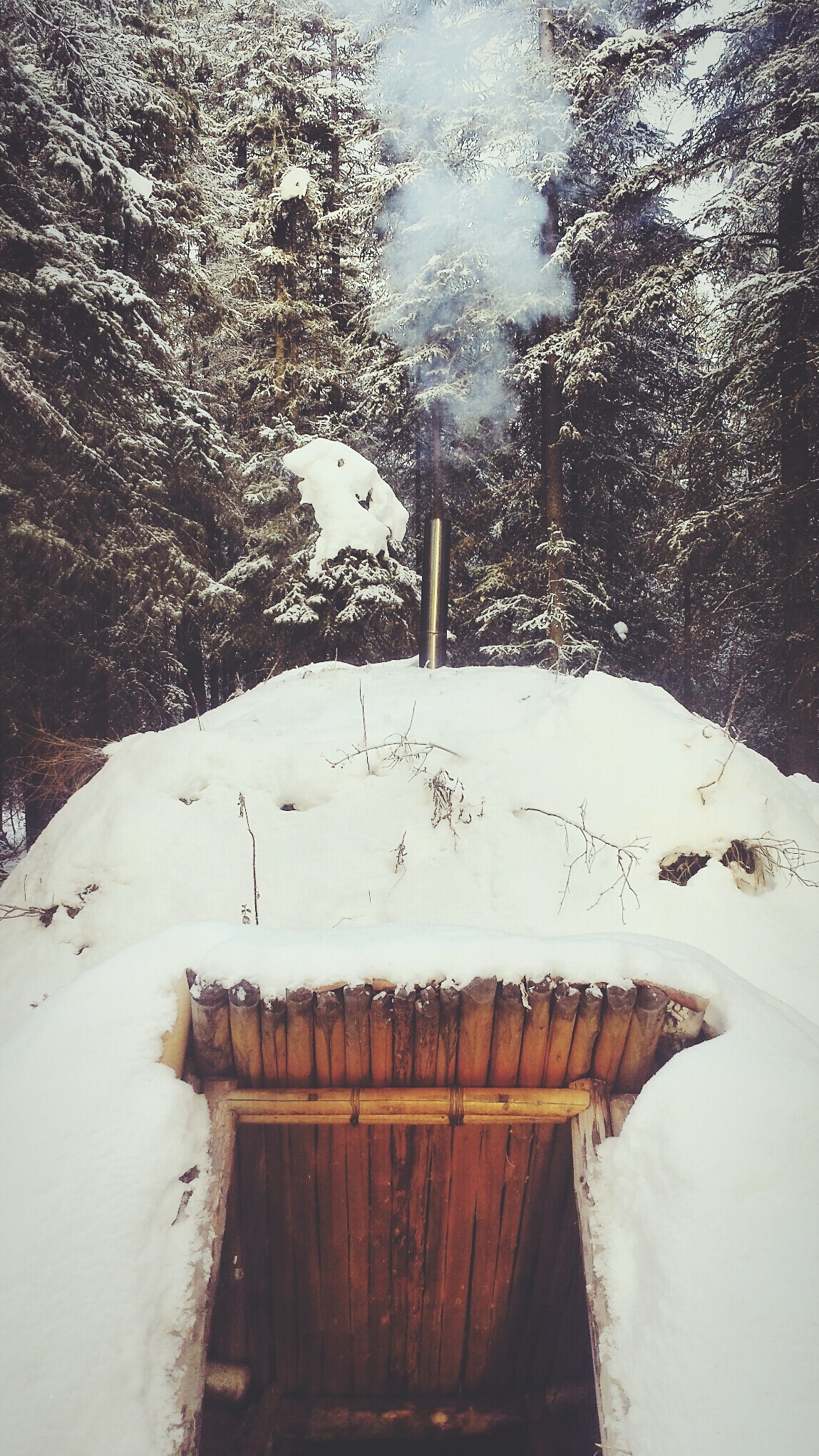
[The Summer of 2012] my friends and I constructed a semi- subterranean earth lodge on the Tanana River in Interior Alaska. It is a combination of my own experimentation as well as the ideas of northern indigenous peoples. The main design elements that I wanted were An entryway that acted as a true cold sink, an open fire that drew air from outside of the lodge, and a comfortable living space that provided sitting, standing and sleeping areas.

The first step was to gather and process the materials

Birch bark: We gathered both live and dead bark in three foot panels. The dead bark was for padding the live bark
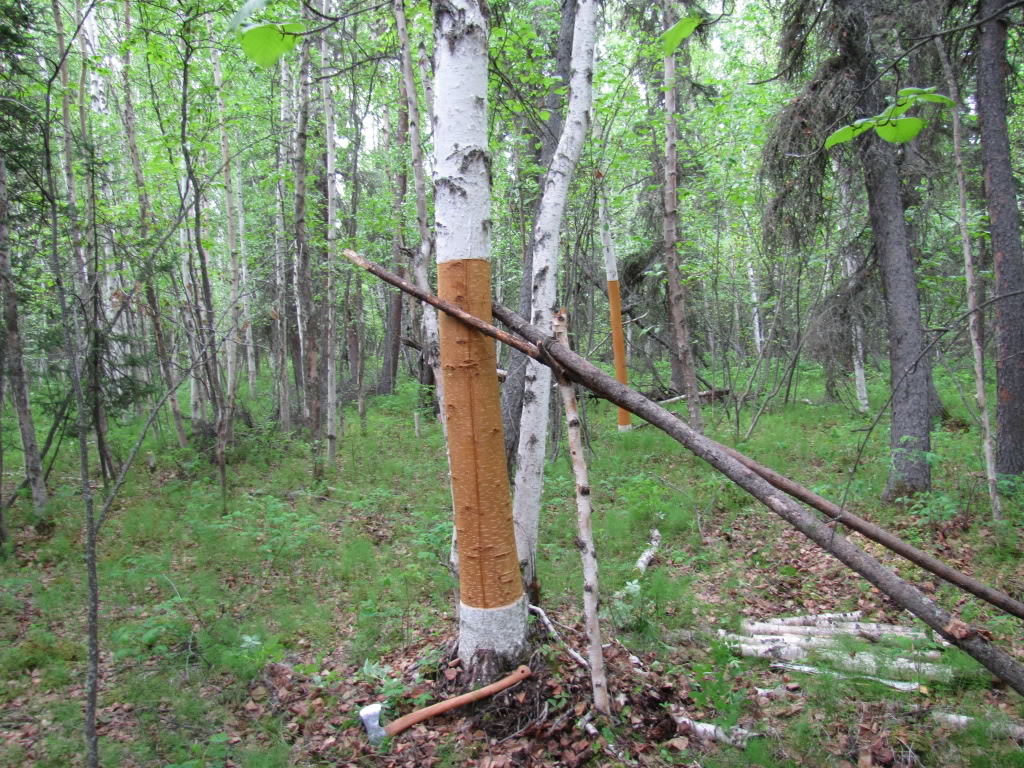
Spruce poles: Over 120 spruce poles were cut peeled and dryed
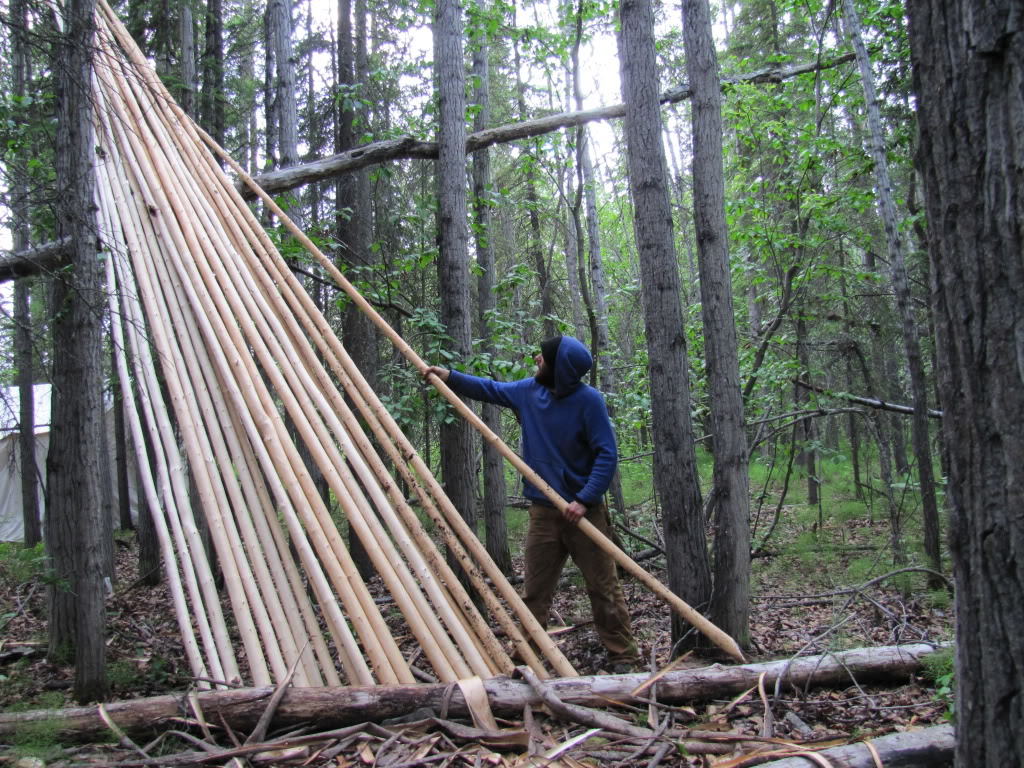
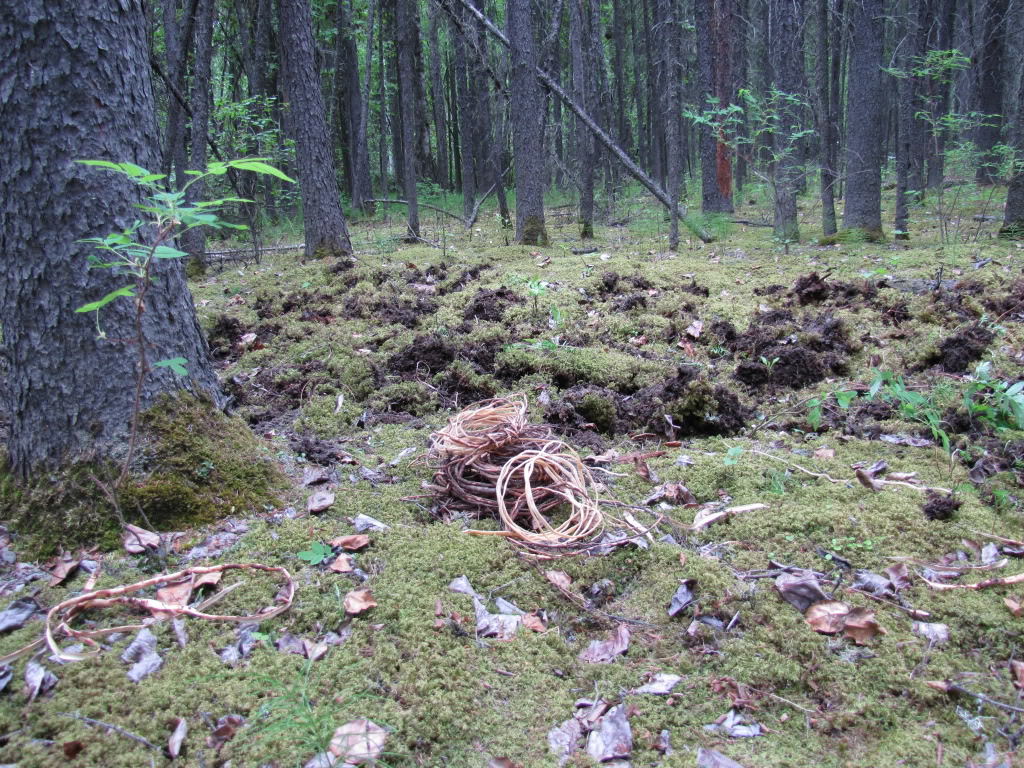
Spruce root: Spruce root was gathered peeled and split to be used for sowing the birch bark roof panels together
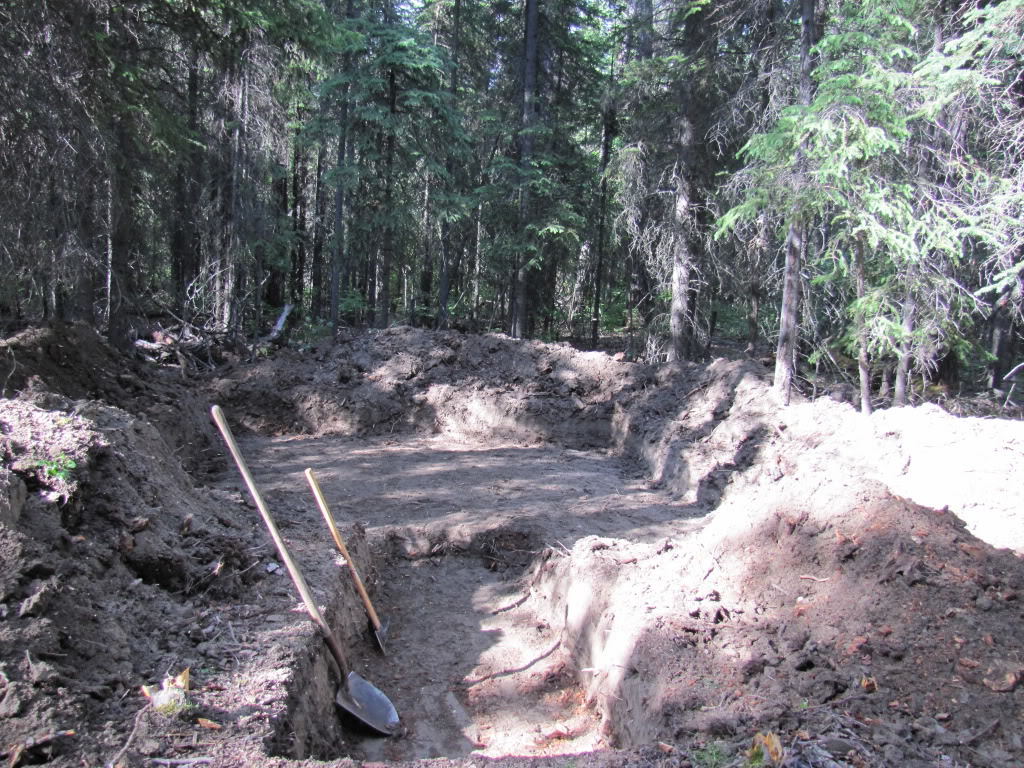
First a roughly fourteen foot square hole was dug. the lodge was to be around 11 foot square.
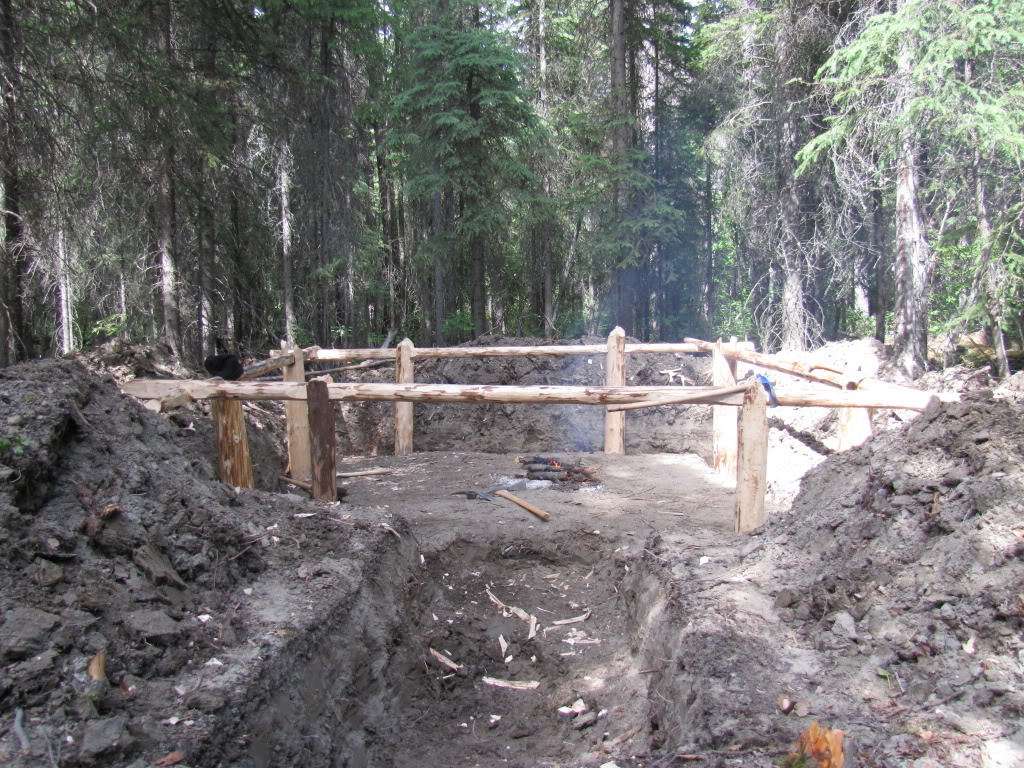
next the retaining wall was begun. Posts were cut, two per side. They were notched with a scoop adz and beams were placed on top. the beams were lock notched together.
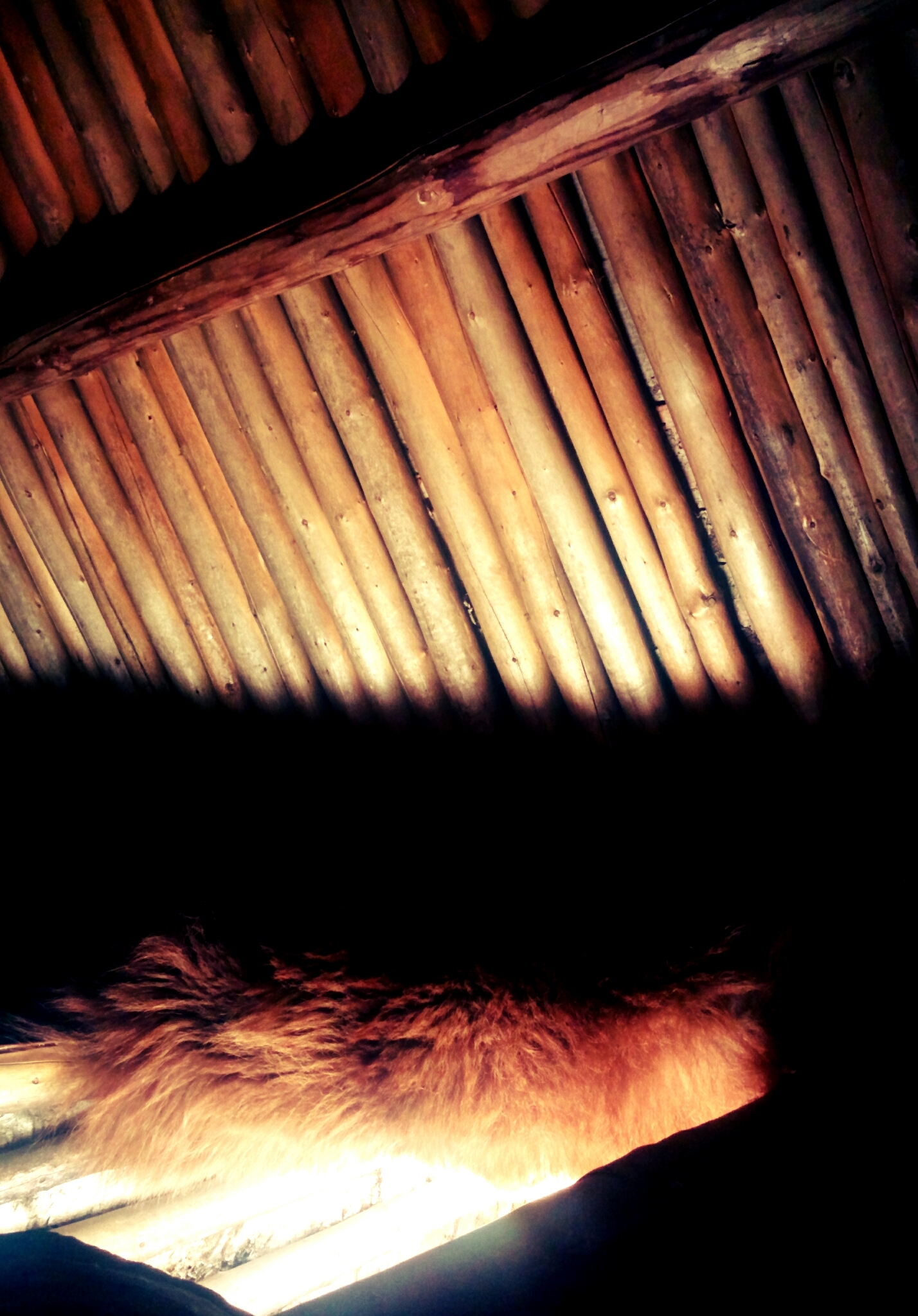
the retaining wall is 3 feet tall so that someone sitting against the wall will not hit their heads on the roof beams. spruce polls were driven in behind the beams at a slight outward angle. Birch bark was placed behind the poles to keep silt from drifting into the lodge. The silt from digging the hole was then filled in behind the retaining wall.
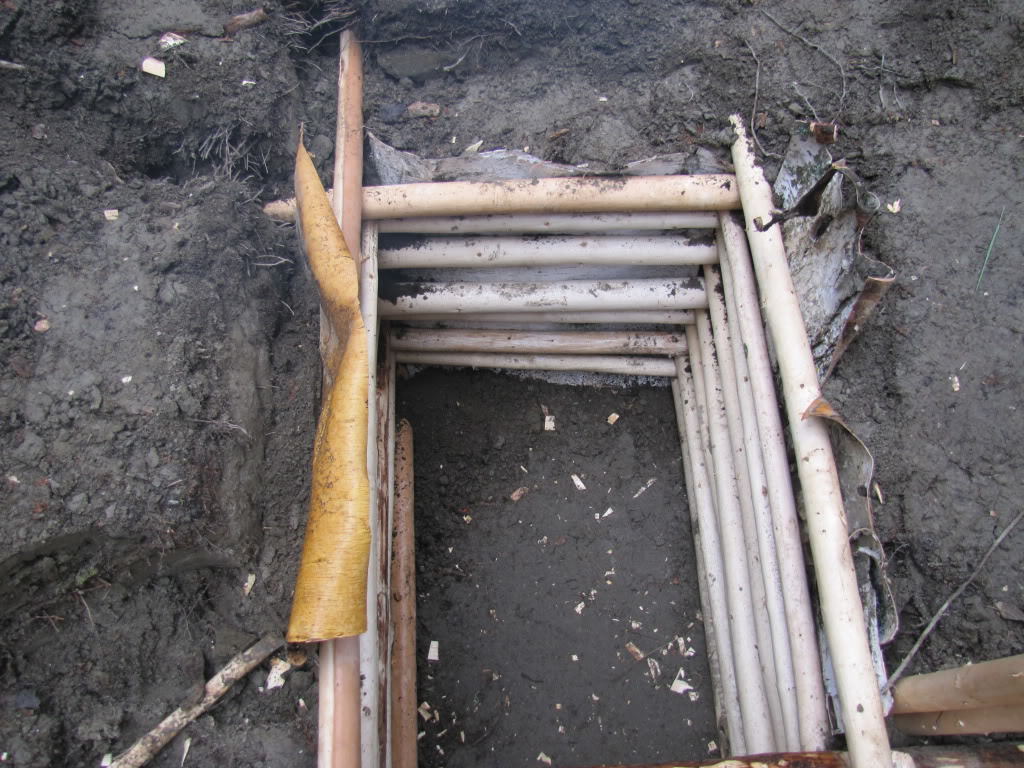
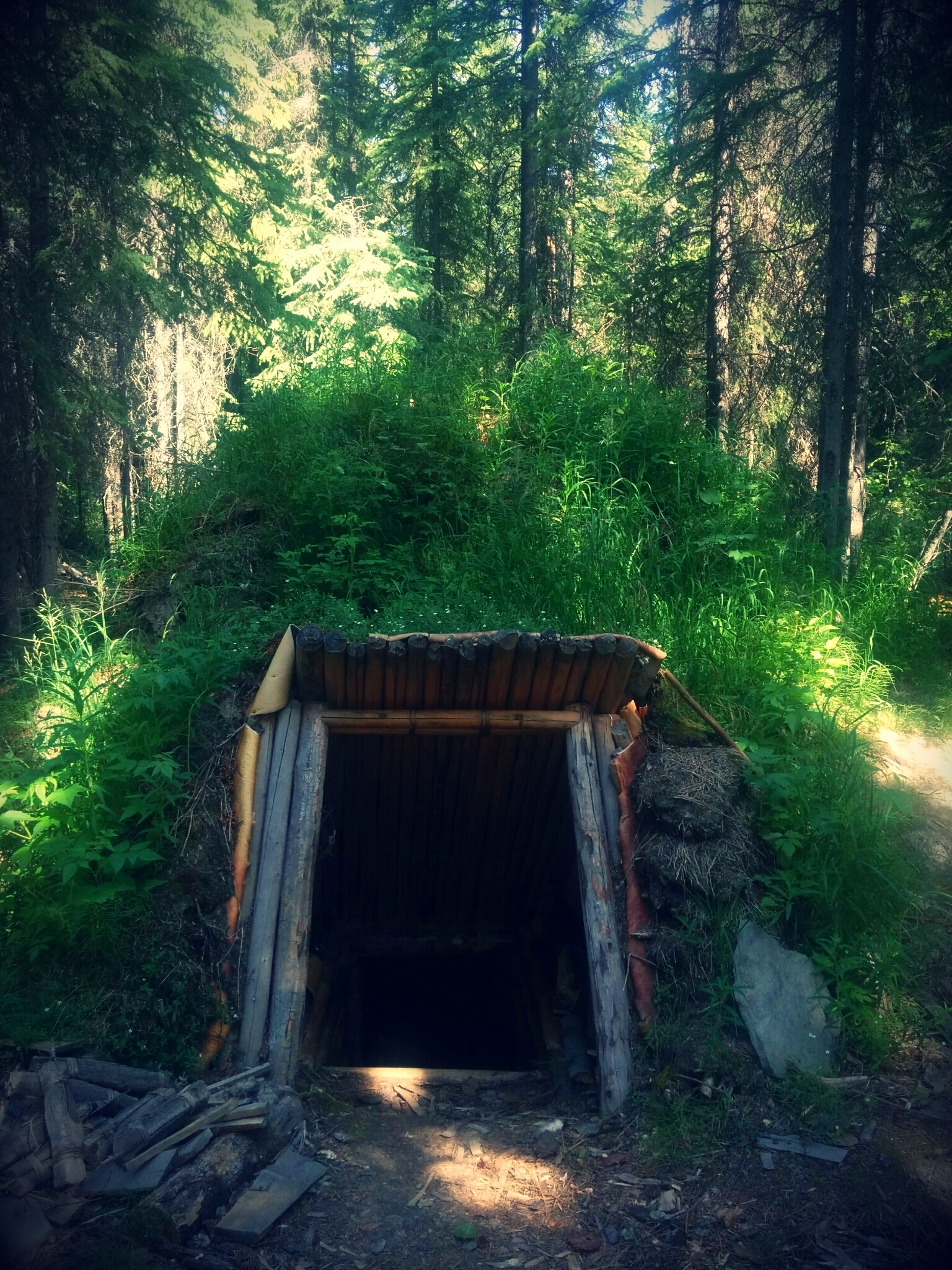
the entryway was cribbed with spruce polles and birch bark. It is thirty inches lower than the floor. It forms a short tunnel which has a roof at the same height as the lodges floor. In this way all the warm air in the lodge will be static
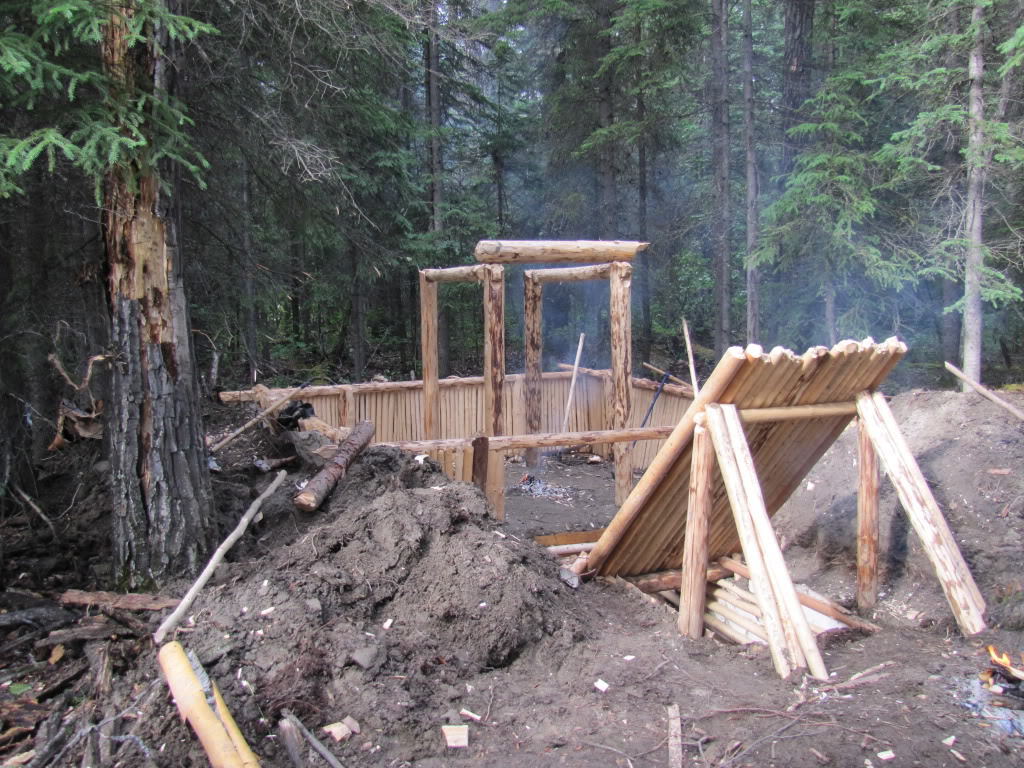
posts and beams were raised that will eventually hold the roof polls. The posts were notched with the scoop adz. The beams frame the smoke hole in such a way that it can not be crushed and is held together by the weight of the future roof
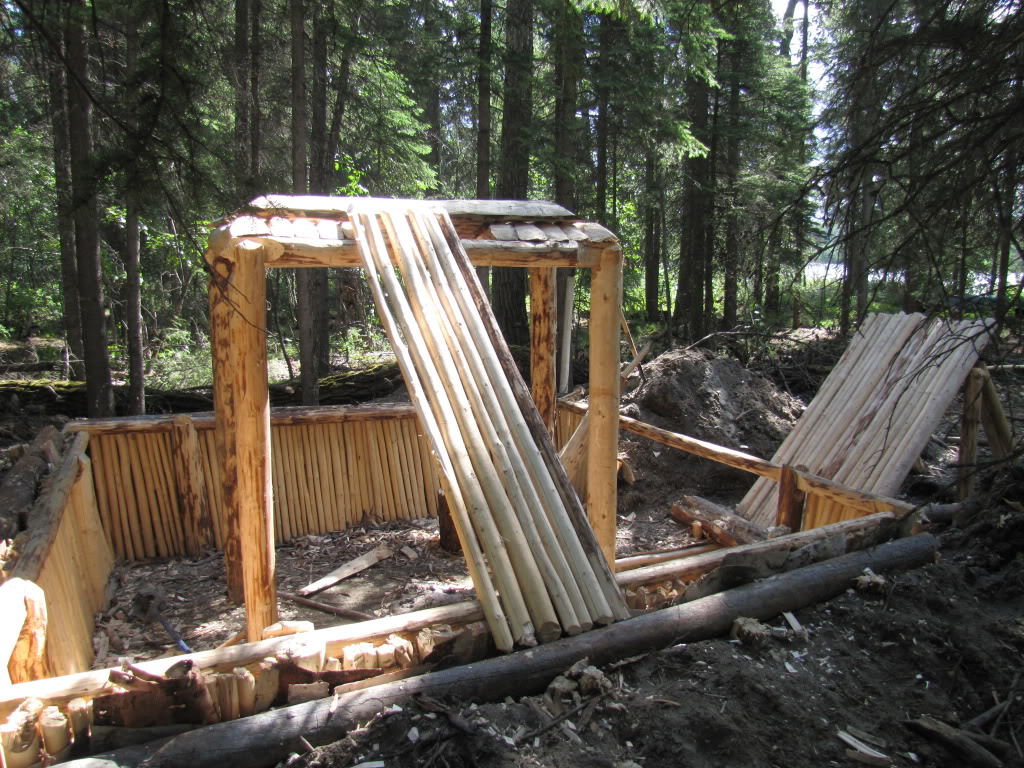
the roof poles rested on logs staked in behind the retaining walls
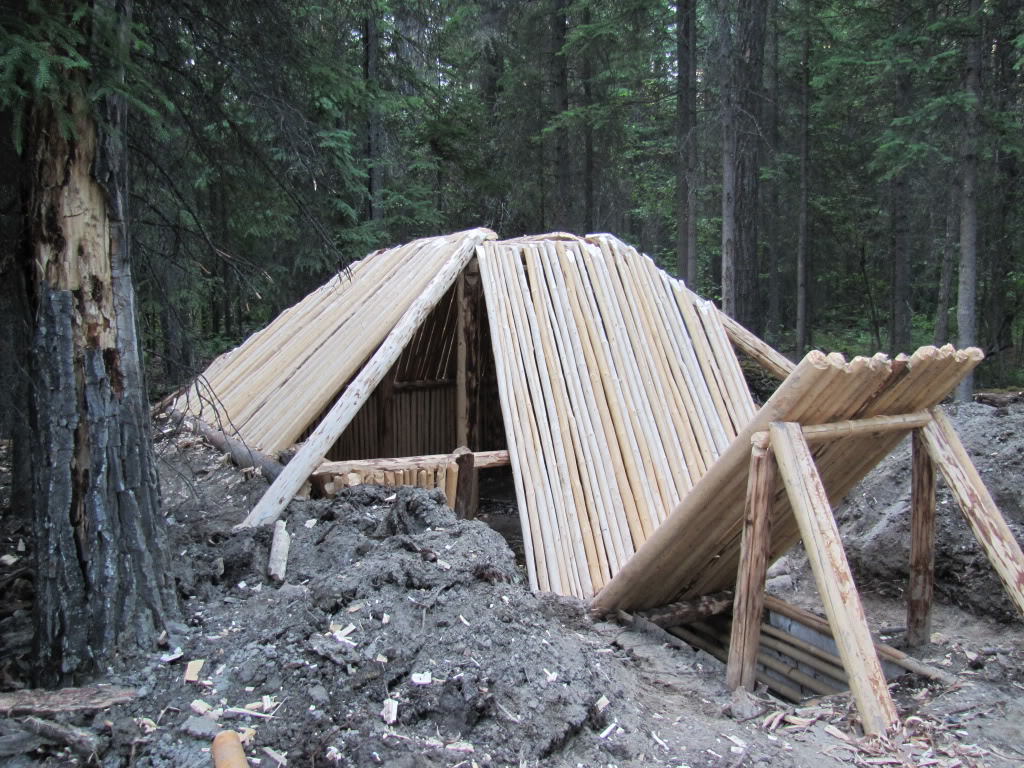
corner posts were placed and the corners filled with polls
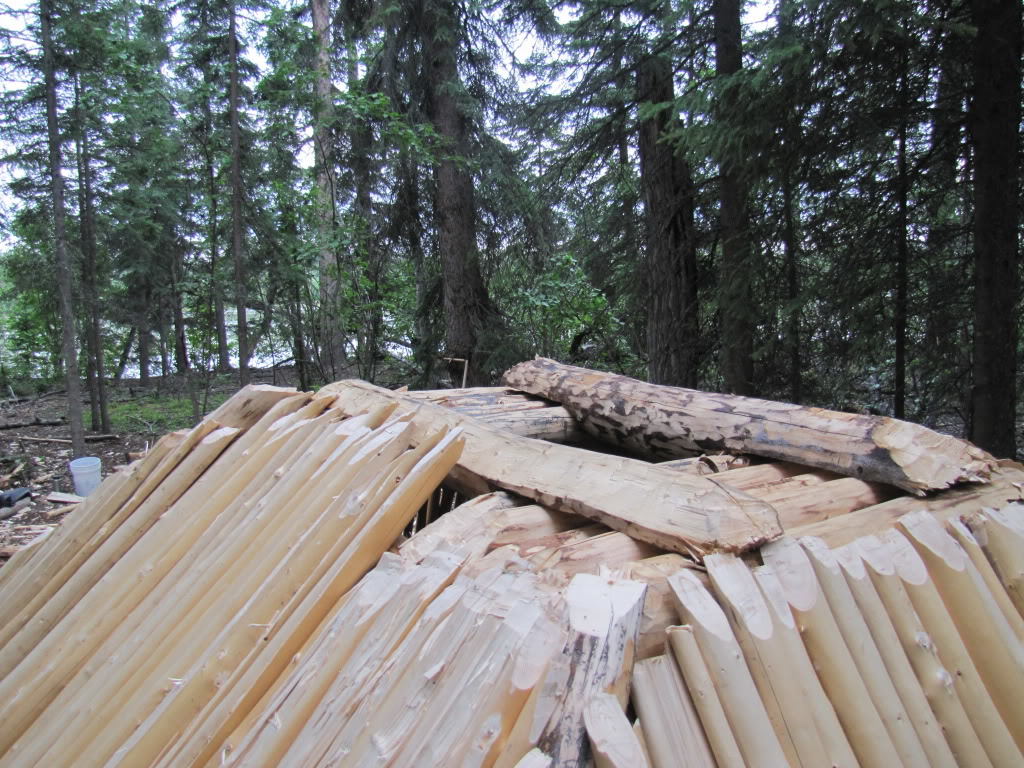
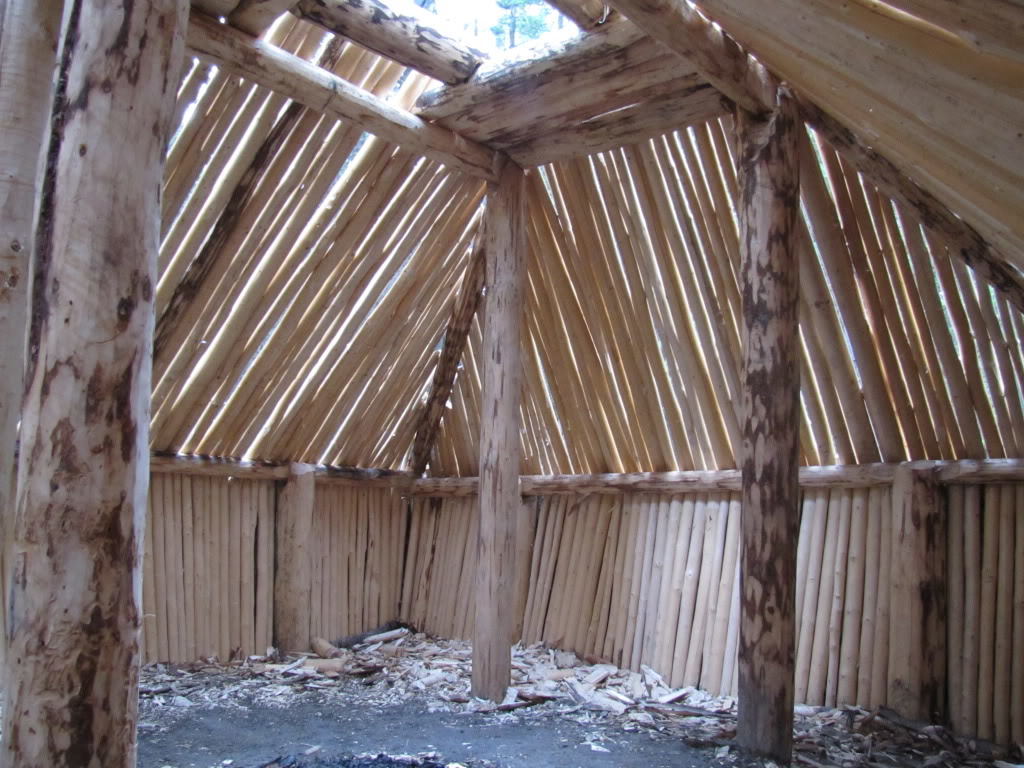
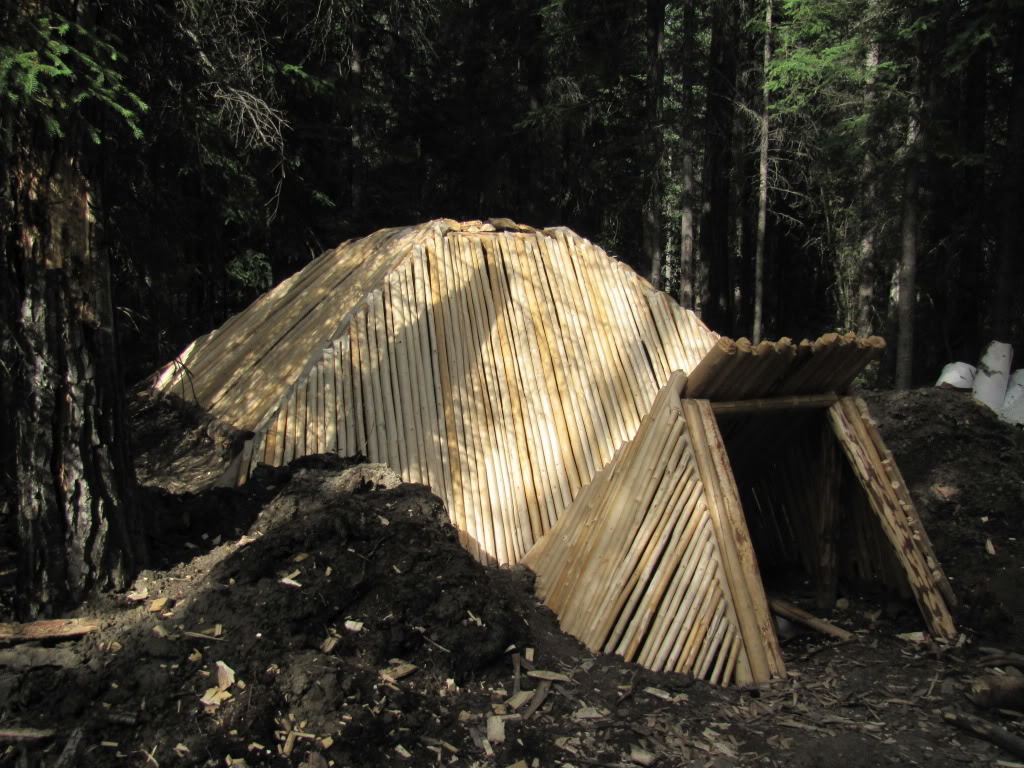
Birch bark panels were sewn into fifteen foot lengths and layered up the lodge.
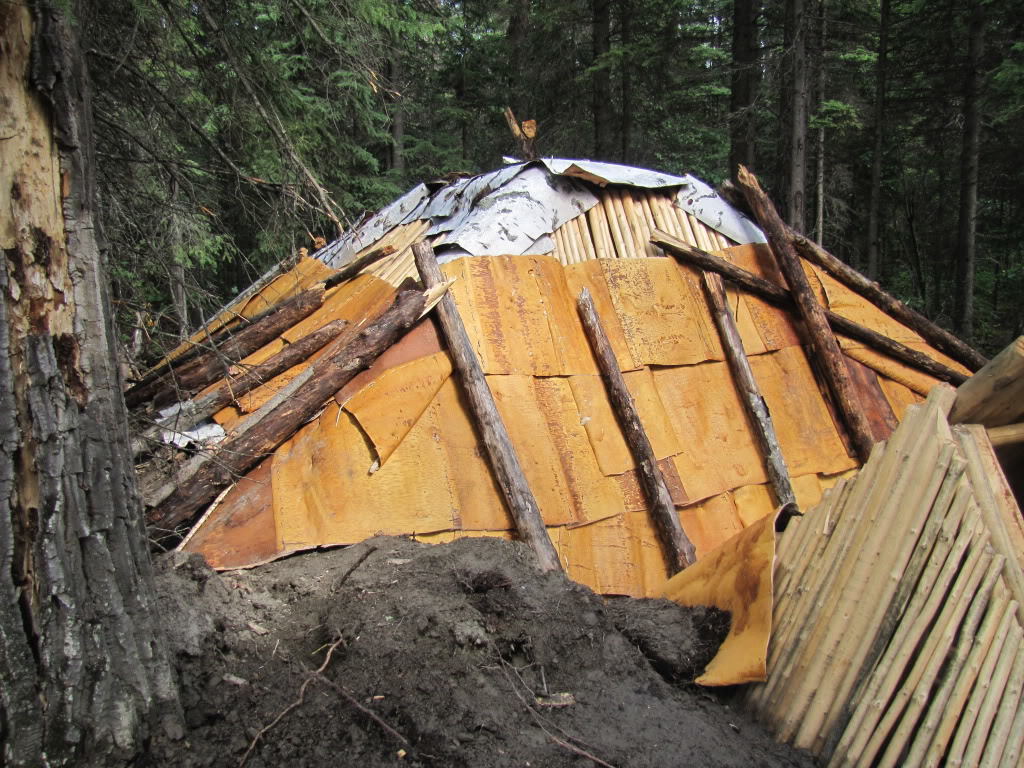
sod was cut into four foot strips that were rolled up and packed in. the remaining roof area was shingled with birch bark and covered with sod.
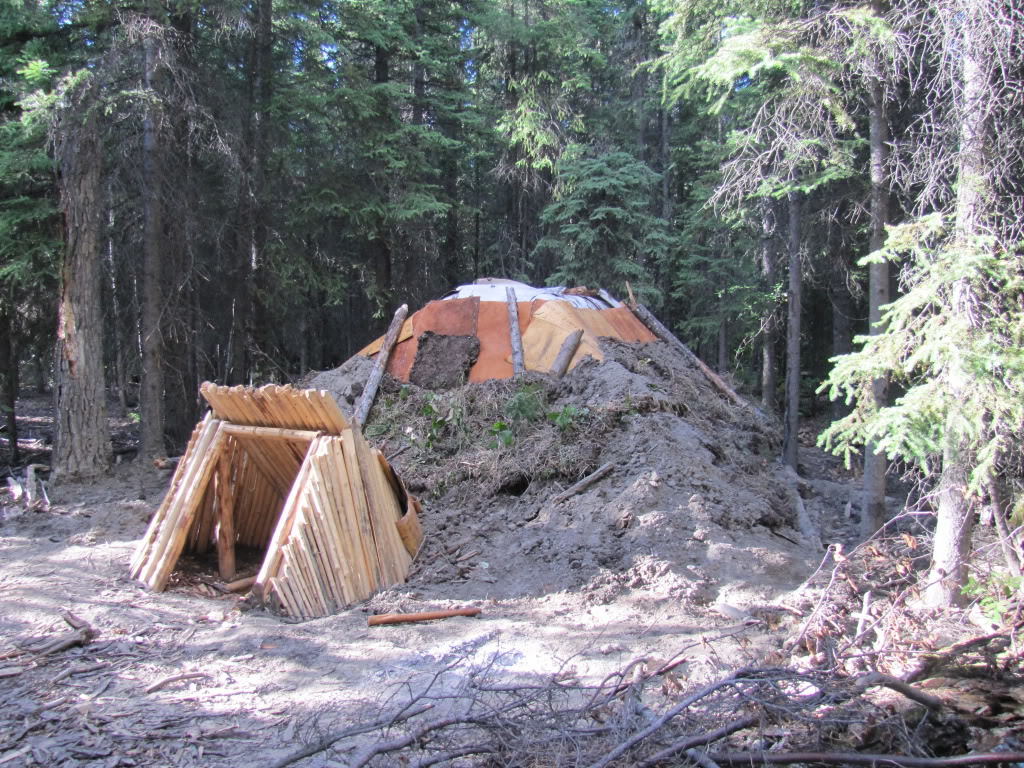
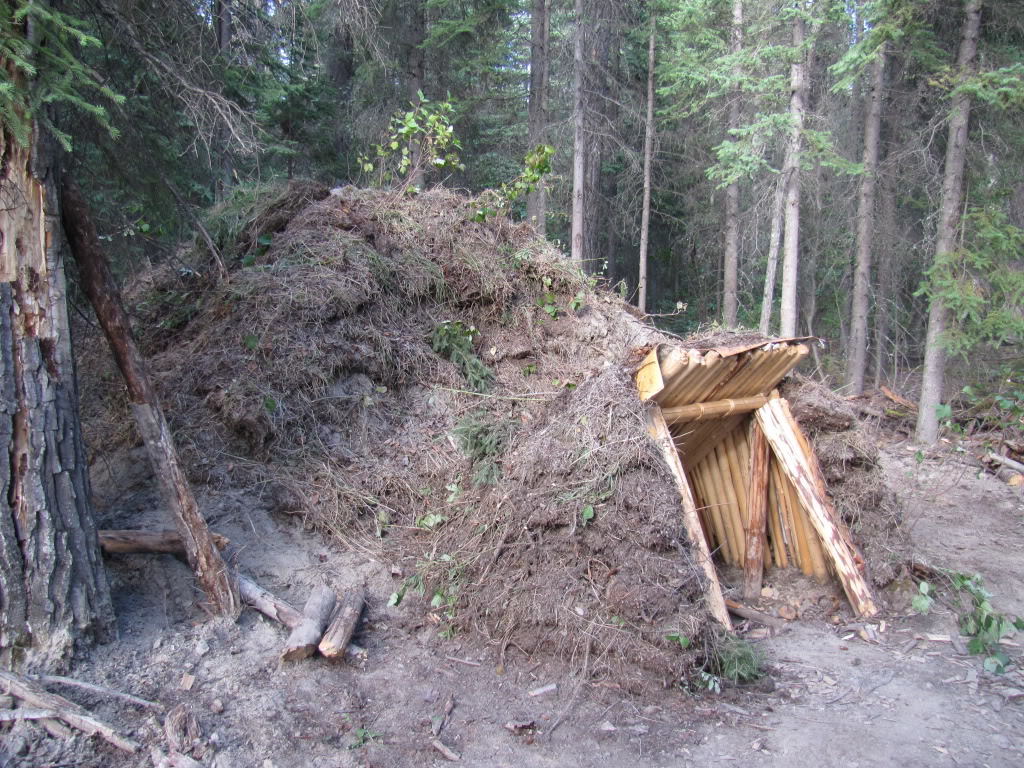
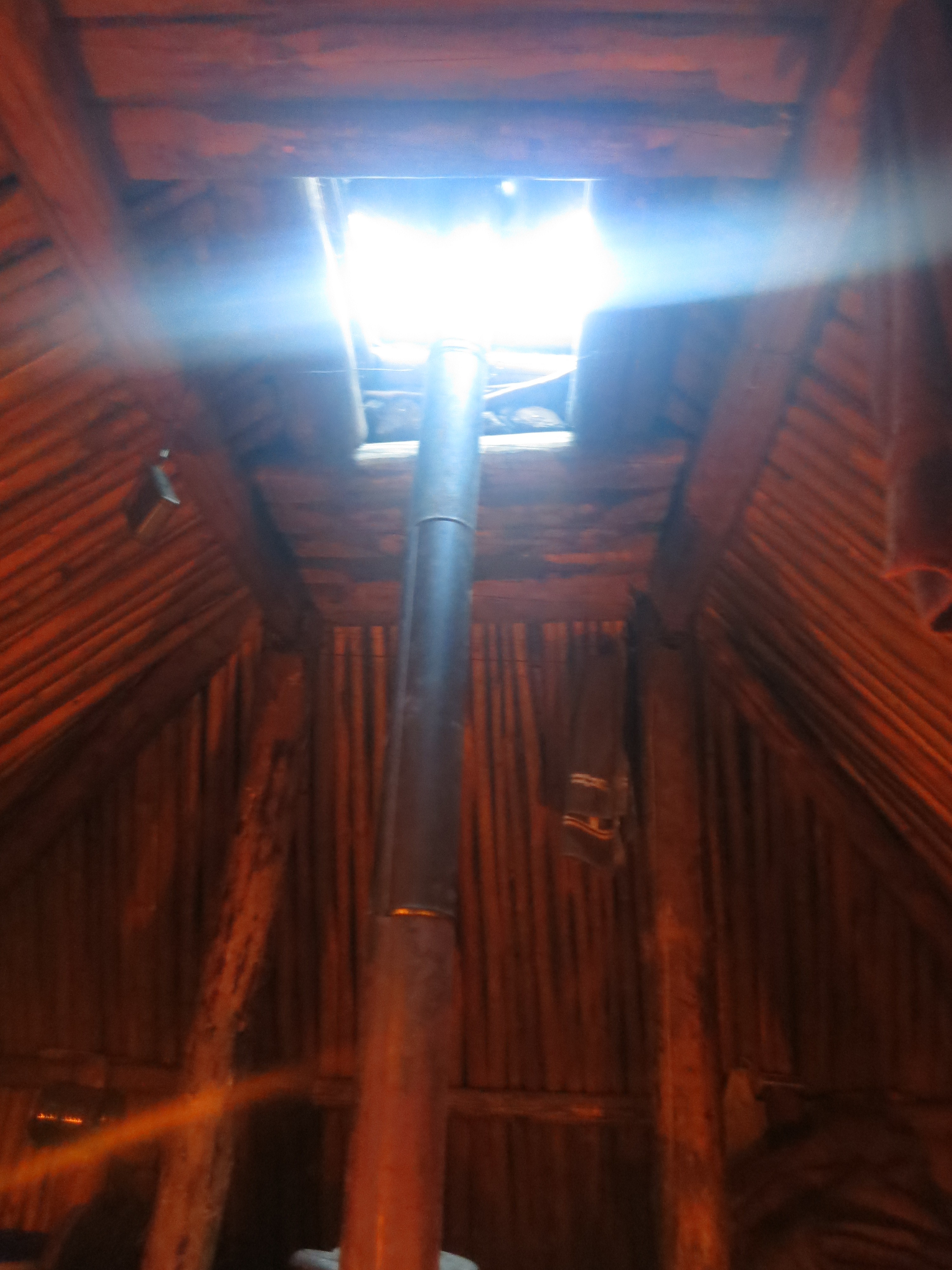
the smoke hole was framed with spruce poles and surrounded with silt
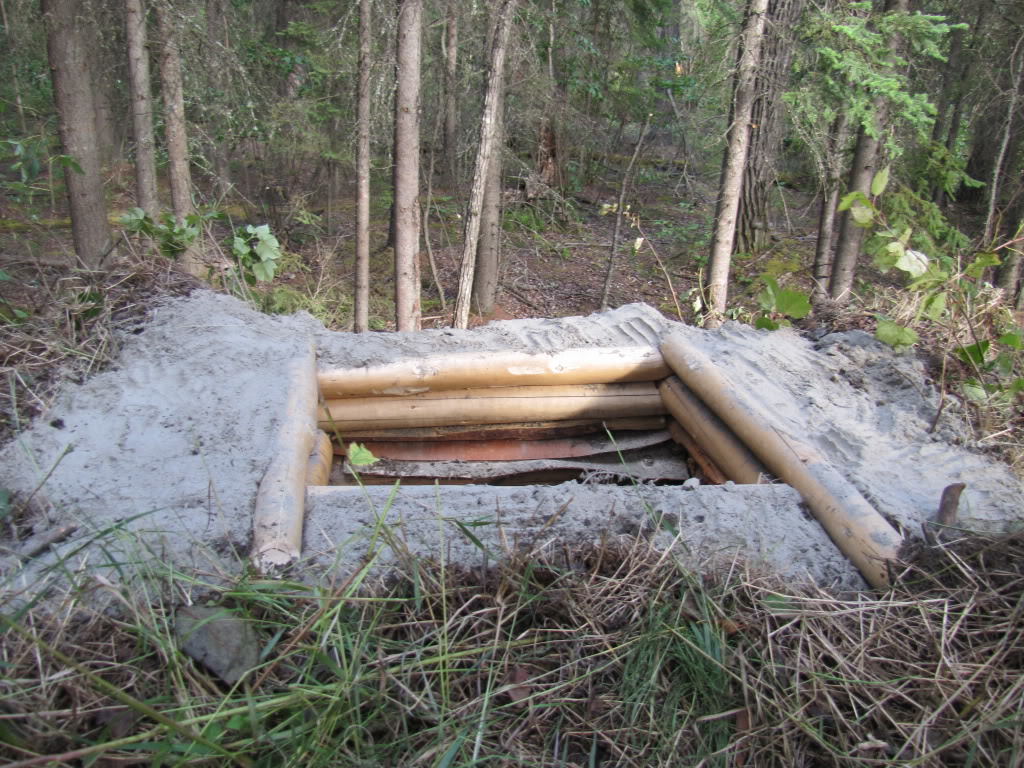
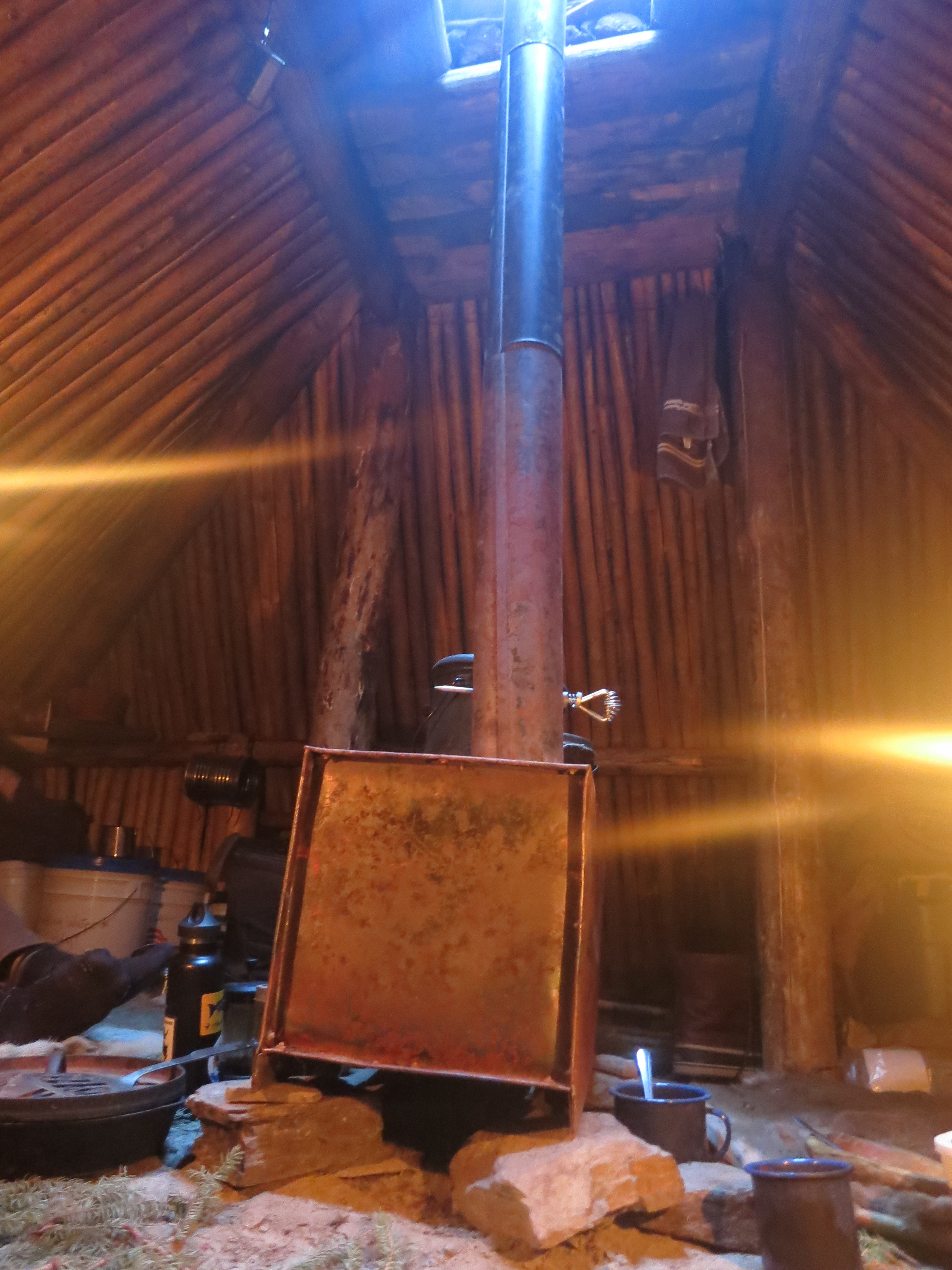
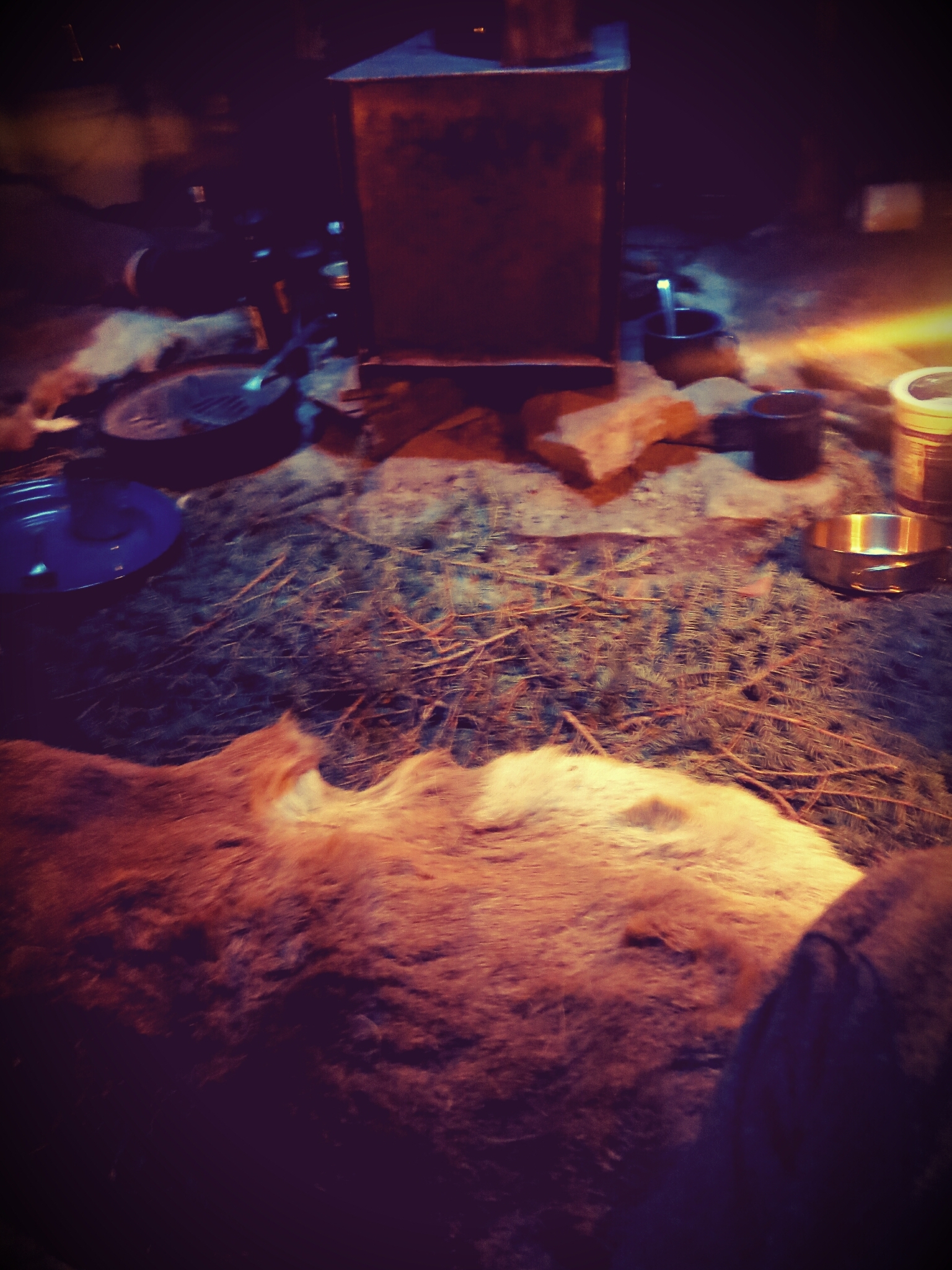
since these pictures were taken the fire pit and air intake system have been built and a second layer of sod has been started. hope all enjoyed the pictures!
4 Likes

2 Likes

2 Likes

This is epic! Well done!

Earth lodge kind of like a beaver house with a little more finesse. Always want to to build one, even as a kid. For warmer climate maybe something like this.
https://www.youtube.com/watch?v=vwIbSysyy5Q

1 Like

hey i found this to be pretty inspiring and am thinking of building something similar. just wondering if there were any lessons learned that are worth mentioning? also wondering how its holding up couple years later? any updated pics?

1 Like

All of the pictures in the comments are from 2015, so they’re not too old.

One of the problems in the structure is there is a moisture trap between the entrance and the main structure. You can see (if looking from the side it’s more obvious) that a “V” is created in that spot. Water stops or slows there and it appears that will likely be the first part to rot.

Yea i was wondering about that spot.
how are the walls dealing with ground moisture? any mildew or fungus forming?
any leaks?

what provoked the install of the woodstove? conserving wood?g
quite a nice looking home!

1 Like

The most noticeable mildew/fungus is on the east quadrant of the roof. I’m not sure if it’s from moisture above or below. Someone commented that in the future they’d prefer to use drier poles that were stripped via drawknife rather than jucier spring trees that the bark can easily be peeled from in sheets. My memory of that comment is vague, but I believe it had something to do with the moisture content of the poles being higher to begin with, which gave various organisms a head start in the decay process.

There is clear evidence of the wall poles absorbing moisture where they contact the ground, but I don’t recall anything obviously growing there.

1 Like

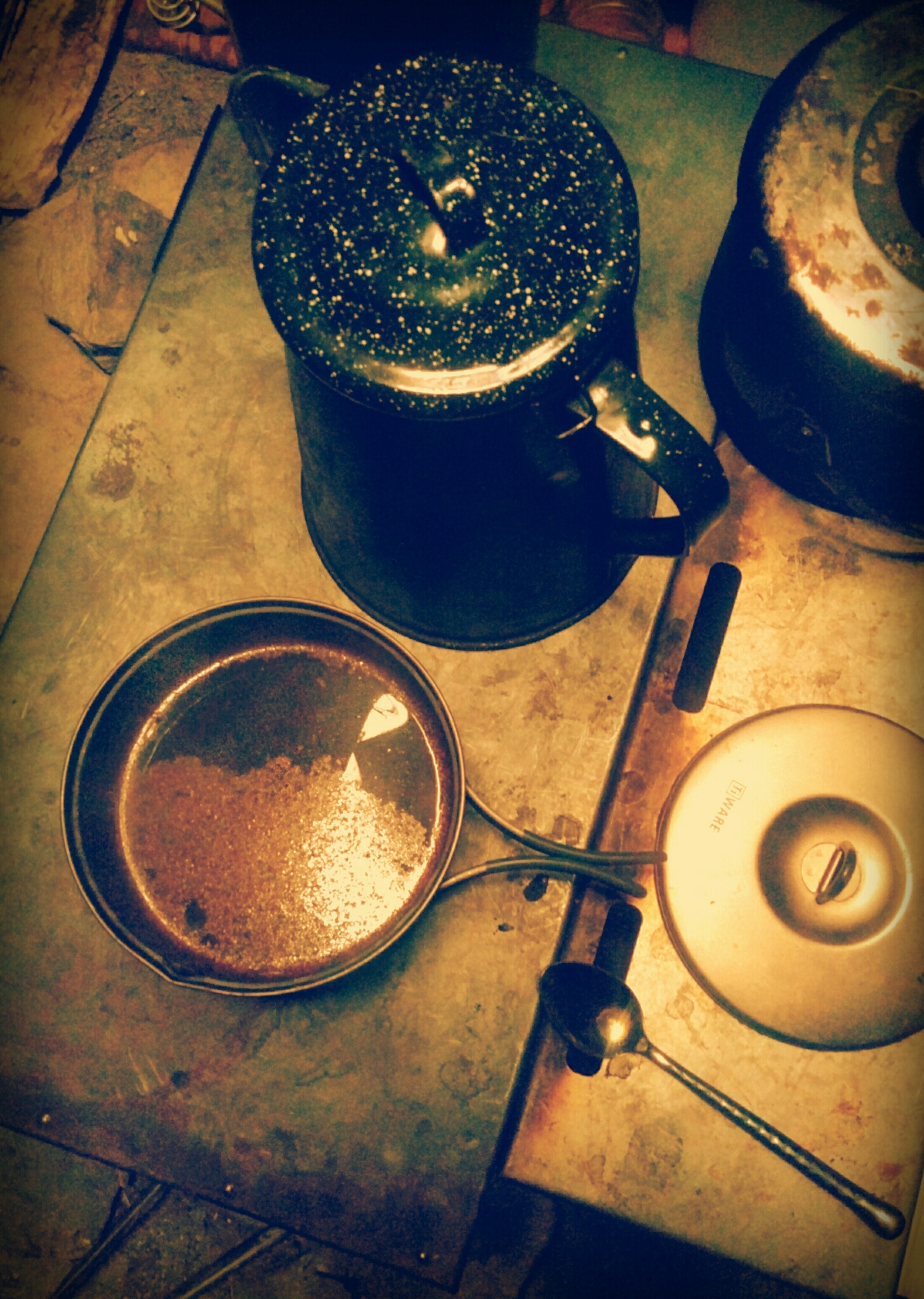
I don’t remember Jeff’s exact reasons for adding the woodstove. I believe it had something to do with the practicality of being there alone (which he was for a year) and that the stove was the only thing that could “do work” while he was out hunting, trapping, fishing, et cetera. I think the main work it was doing was cooking, more or less. My interpretation is that it was a compensation for a lack of other people to share efforts, though I’m sure there were other nuances at play.

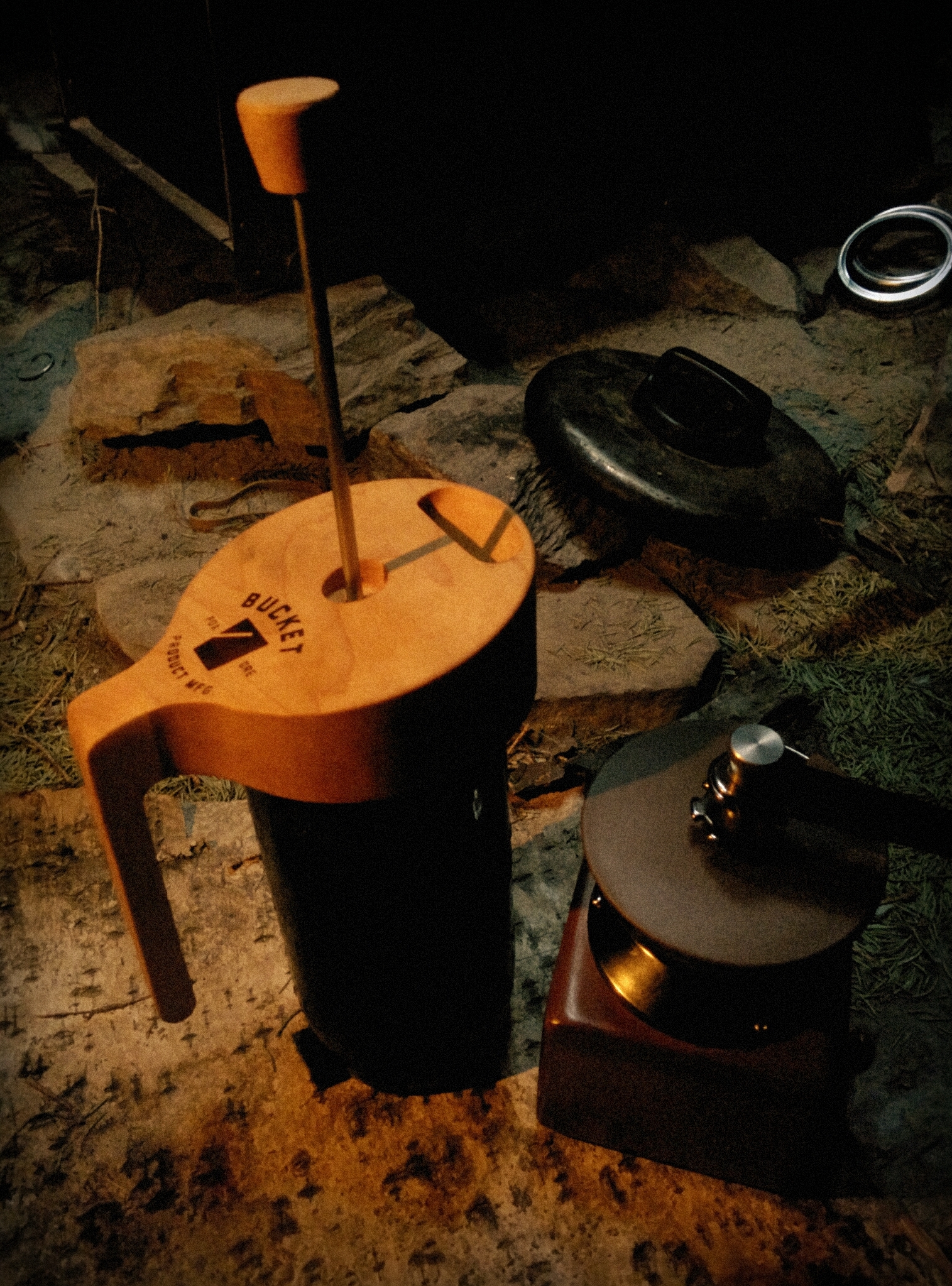
When Jennifer and I arrived, it was winter, and the stove was already in there, and we just left it the way it was. But at -50 F, I didn’t have many moments where I thought, “wow, this would be better if all the heat from the fire was vented out to the sky.”

1 Like

Looks very much like the inspiration for this project. Almost the exact design:

"The Brooks River barabara is a reconstruction of the original prehistoric house depression dated to A.D. 1200 to 1300. Based on the work of archeologist Don Dumond, the dwelling was left in skeletal form for visitors to see into the interior. It is located at Brooks Camp. NPS photo. [Source]

1 Like

I wonder how they solved that potential problem of collecting rain in that V area? I also wonder if they burned the outer layers of the tree poles that are in the ground? Kinda like this? http://shousugiban.com/

1 Like

Good question. That example is a few hundred miles south and west of us so their climate might be different enough to make a difference too.

1 Like

Lots of high quality birchbark!

2 Likes